

You don't have to let TSA scan your face — here's what happens if you refuse
Saying "no" can be intimidating, but it shouldn't cause you any problems.
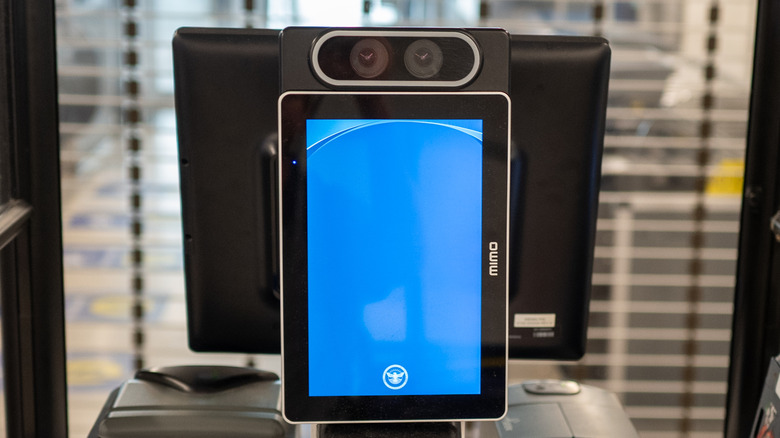
When you're standing in an airport security line with serious-looking uniformed people barking orders at you and impatient travelers behind you, the natural response is to do whatever they say, including having your face scanned. But in this case, you don't have to: you have the right to opt out of a facial scan.
At the start of the security line, you'll see a webcam-like camera lens pointed right at your face, and the TSA officer sitting behind it will say something like "Stand right there to have your photo taken." What the officer likely won't say is that the face scan isn't mandatory and you can opt out. If you haven't noticed the signage informing you of that right, you're not alone. The signs can be printed in small lettering, stuck in places you're unlikely to notice or be missing entirely.
Even if you know you can opt out, you might allow the face scan anyway. You hear grumbling from the line behind you; the TSA officer looks ready to snap at anyone who gives them guff; your flight leaves in an hour, and you don't want to get pulled aside for "random" screenings and searches. But take a moment, smile, and tell the officer, "I'd like to opt out of the facial scan." The agent will still ask for your ID and boarding pass, and you will almost certainly continue on your merry way.
Why you should opt out of TSA face scans
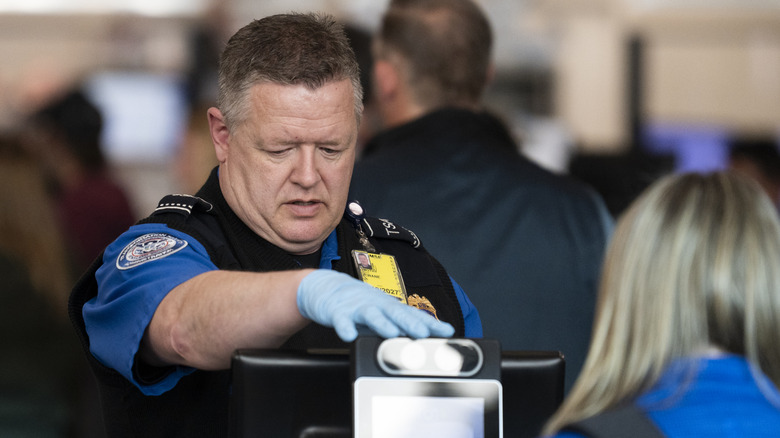
You may feel it's a bit invasive to have your photo snapped every time you fly, but you're in an American airport. Cameras are everywhere, tracking your movements to determine whether you're a safety risk. What's one more photo in a place like this? But the TSA's facial scan captures a much more detailed image than an overhead camera. It shows your face head-on and maps your facial geometry. In a world where many of our devices use faces as passwords, a high-quality photo of yours is private data. The TSA claims it deletes these photos immediately, but acknowledges it may retain some photos for longer for testing and evaluation.
Facial recognition is also error-prone, especially with women and people of color. Still, even white males aren't safe: A test by the ACLU found that an Amazon facial recognition algorithm falsely matched photos of 28 American Congressional representatives with criminal mugshots. If the computer decides your face doesn't match your ID, that's more likely to delay your travel than to decline the scan altogether.
Moreover, the current system is a pilot program, so it's unlikely to stay contained to a single ID check. The next version of this technology might be more invasive and could show up elsewhere, and not just in the airport. Immigration and Customs Enforcement (ICE), like TSA, operates under the Department of Homeland Security and has been using a facial recognition app that (unreliably) identifies people based on a smartphone photo. Outside the government, Meta looked ready to deploy a similar feature in its smart camera glasses earlier this year before quietly rolling back that plan when the code was discovered.
Will TSA agents retaliate if you opt out of a face scan?
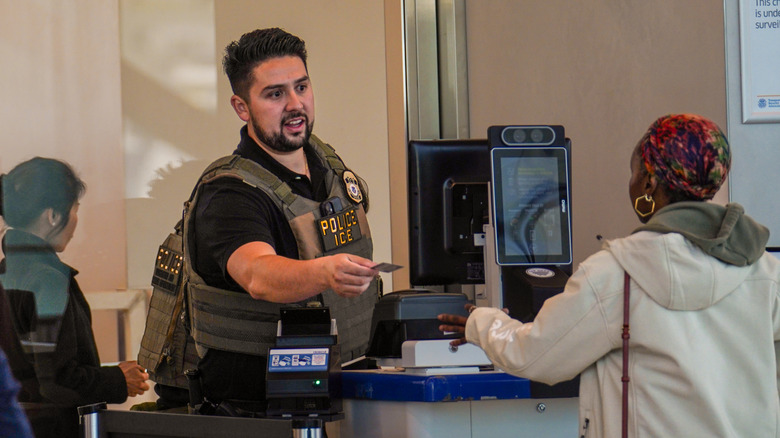
One of the biggest concerns people may have about opting out of the voluntary TSA facial recognition scan is that it could impede their travel. Some may even worry about being interrogated or worse. With news of ICE arrests at airports on the rise, immigrants and people from marginalized backgrounds may feel even more fear. A 2025 report from the Algorithmic Justice League (AJL) found that 99 percent of travelers interviewed were not told they could opt out of the scan, and a further 67 percent reported that opting out resulted in "negative treatment" by TSA officers, including "verbal abuse, public shaming, and perceived additional scrutiny."
In my own experience as a white-passing, cisgender man born in the United States, opting out of the facial scan has never presented any issues. I've opted out every time I've flown since face scanning was implemented, and never had any issues with TSA employees.
Even if you're worried about the risks, you may be better off declining the facial scan: A National Institute of Standards and Technology study found that recognition technology makes a significantly higher number of errors with women, Black people, East Asian people, and other nonwhite or nonmale demographics. A false negative on a face scan gives a stronger pretext for TSA officers to pull someone aside than declining the scan altogether. Opting out, unless you see clear signs that doing so may lead to mistreatment, is likely the best option overall.