

Discs vs. disks: What's the difference?
There are more things that set them apart than spelling.
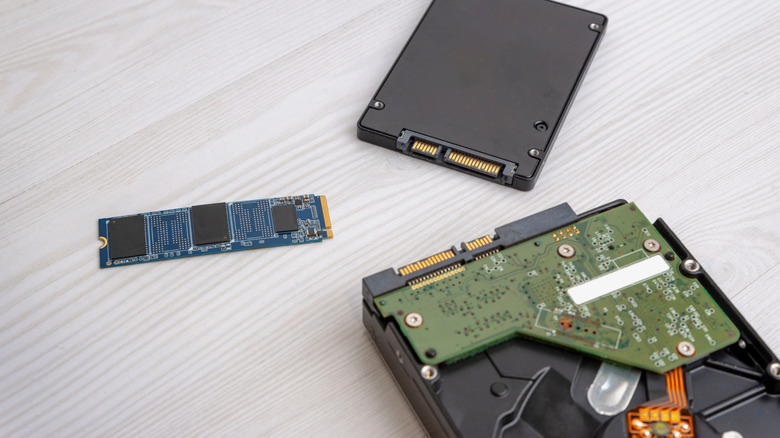
One of the key parts of understanding technology and its many eccentricities comes from understanding the actual language being used and discerning the unique, subtle differences a letter can make in a word. It may not seem like much, but something as simple as a changed letter can do a lot of heavy lifting for certain pieces of technology.
If you've been around tech for any amount of time, you've most likely come into contact with the word disc. Or perhaps you saw it spelled as disk, concluding with a K instead of a C. It may seem like a curious case of the Queen's English contrasting with American spelling, but it's actually a bit more complicated than that.
Though they share similarities in some ways, the two spellings often refer to different types of technologies. It can be confusing, but once you understand the distinctions, it becomes clear how each one is different from the other.
The difference between disc and disk explained
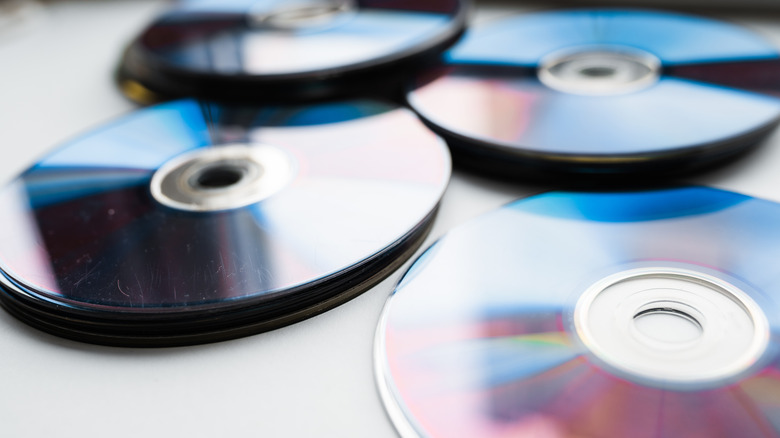
To put it simply, the two spellings of disk and disc refer to traditional magnetic storage vs. optical storage media. They share similar modalities and functions, but the spelling of each one is indicative of what type of media you're dealing with.
What is a disk vs. a disc?
Disk with a K generally refers to magnetic storage, such as older mechanical hard drives and floppy disks. You likely have noticed the word spelled this way on your computer, as it refers to your hard drive as disks. While SSDs are also identified with the word disk, they're not technically disks in the traditional sense, as a majority of them use NAND flash memory as opposed to moving, mechanical parts.
A disc, with a C at the end, is usually in reference to optical storage formats. This is what you may find when you open a video game, if it even has a disc these days, of course, or a DVD. If you look on the back of a Blu-ray case, you'll notice it refers to itself as a disc. If you buy a music CD, you'll notice that it is also referred to as a compact disc as opposed to disk.
The key uses of a disk and a disc
It may seem tempting to wonder whether, on a technicality, using the terms interchangeably wouldn't be entirely incorrect. While it's not likely to get you yelled at, a disk and a disc serve two distinct functions with form factors that sometimes feel like they do the same thing.
If you're transferring files on your computer, downloading them from the internet or inserting a floppy into an older PC, you're making use of a disk. On the contrary, if you're putting a video game into a console or a DVD into a player, what you're using is a disc. Both are designed to store and display data and files, but the way they work is fundamentally different from each other.