

Neurable One review: The brain-scanning headphones that helped me stay focused
The cans hide a wearable EEG that tracks your attention.
- Far cheaper than previous models
- No subscription required
- Simple, clear UI
- Weight becomes a burden during long periods of use
- No EQ customization
- Not quite a mainstream product, yet
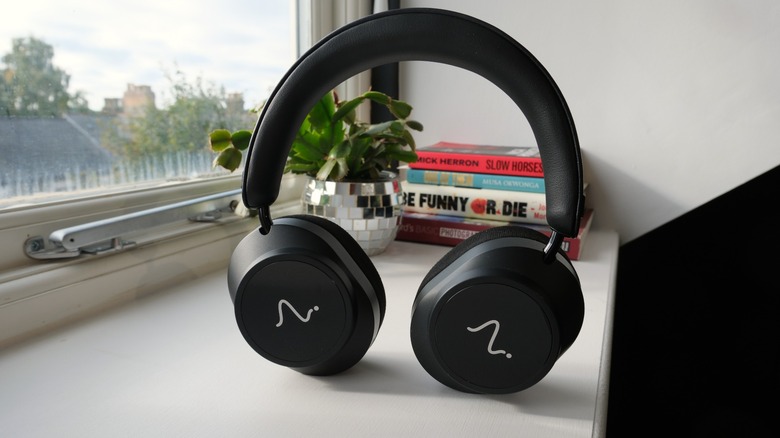
I've always been fascinated by the inner workings of the human mind, and I've tested plenty of brain gadgets in my time. Sadly, all of them have been so clunky that they can only really be worn in the privacy of your own home. At least, that was the case. The Neurable One actually buries its brain-scanning technology into a pair of beefy over-ear headphones. It's designed to keep an eye on your focus levels and attention while you work, or meditate, wherever you are.
The company describes it as a "fitness tracker for your brain," so when your attention starts to drift, the headphones will remind you to keep your focus where it needs to be. And, if things continue to go wayward, you'll be advised to take a break and come back fresh rather than burning out halfway through the day. In that regard, it's been fascinating to see how the system thinks my brain operates on a regular basis.
The Neurable One is cheaper than its predecessors and its competitors, and Neurable has improved its software platform. If there's a downside, it's that as much as I've loved my time with them, it's hard to think anyone other than nerds like me will want to use them.
Hardware
Neurable spun out of a project from the University of Michigan in 2015, with the goal of building Brain Computer Interfaces (BCIs) and algorithms to interpret that data. The focus is on cognitive performance as there's plenty of military and civilian applications for the technology. Despite the name, Neurable One is actually the third pair of EEG headphones the company has made. In 2024, it partnered with Master & Dynamic on the MW75 Neuro, and a year later the Neuro LT, a lighter version of the same product addressing user comfort issues. This time out, Neurable is going it alone without the backing of any fancy audio brands.
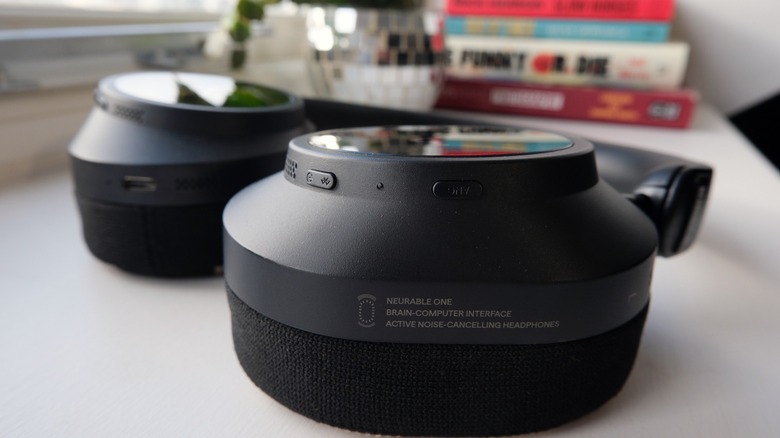
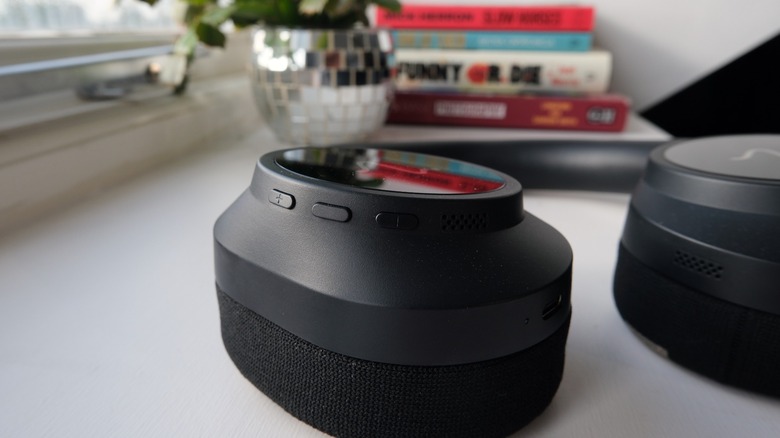
At a glance, you'll struggle to notice much difference between this and its predecessors, as any variances are mostly aesthetic tweaks. Button placements are the same, but they're now pill-shaped rather than the circles found on the older models. The logo on the earcups has changed from M&D's icon to Neurable's signature brainwave, and there are fewer vents. In fact, the biggest difference is the loss of the cantilevered armatures joining the headband to the earcups, which have been replaced with standard hardware here.
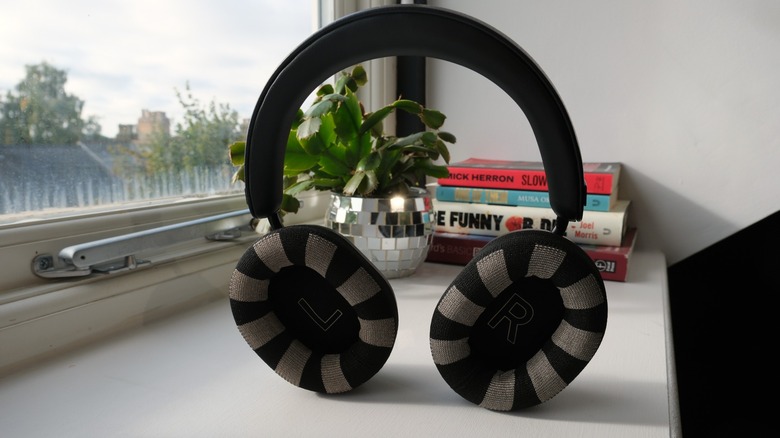
It's a similar story inside the body as well; the Neurable One is more or less equipped with the same gear as before. You'll get the same 40mm Beryllium drivers, Bluetooth 5.2, AAC and aptX, albeit with six microphones — down from the eight on the MW75 Neuro. As before, each earcup has a series of dry-fit EEG sensors woven into the earpads which sit around your ear.
In-use
Neurable's pitch is to help people gain deeper insights into their own cognitive performance through the day. It contends that, much like the rest of our body, our minds have enough fuel to get us through the day, but not at full-tilt, full-pelt output. The company says it's a better idea to, when your attention and focus starts to wane, take a break ahead of you burning out. Neurable argues that spending a quick five minutes staring out of the window is better than getting a headache and not functioning for an hour.
Strap the headphones on at the start of the day and the system will keep an eye on how you're doing. Do this over a period of days, or weeks, and you'll get a sense of where your focus is at its highest and lowest. You can then adjust your working patterns to suit those stats. The Neurable One works equally well when you're meditating or relaxing, giving you insights as to how and when your mind rests.
One of my eternal gripes with a lot of wearable EEGs (and other fabric sensors more broadly) is that the sensor pads are often fussy. They often don't work at all if they're bone dry and the skin they're in contact with is dry as well, which frustrates me. I've regularly had to gently dab the pads with cold water before running a washcloth across my forehead to dampen it. But, if the skin and pads are too wet, you'll be given a warning to dry both out, which slows you down even further. Thankfully, the Neurable One's dry-fit sensors worked from the get-go more or less every time I've used them. Every now and again, I'll be asked to push my (short) hair away from around my ears to improve the connection, but it's a world away from other products in the same field that I've tested.
Setup is a breeze, and the process of beginning your first session is relatively effortless, as is the daily routine you're expected to fall into. That begins with a check in at the start of the day, closing your eyes and triggering a 60-second scan of your brain. You'll get a dashboard containing your scores, with a comparison to the day before to see if things got better or worse. If you had a rough night, or if there's a lot going on, you can journal some notes on the same pane.
What's far more interesting and useful are the Insights and Improve sections, which tell you both what to do to manage your cognitive load right now, and how to boost it. The former suggests that you delay big decisions, not starting jobs that need a lot of attention and grouping small, repetitive tasks together. The latter asks you to go for a quick walk in the sun, go sit in another room away from your computer for five minutes or to write down all of the things sitting in your mental cache. Once done, you can run another check-in to see if that's made any improvement.
If I'm honest, I was having a busy day at the start of a busy week, and felt snowed under by all of the projects on my desk. (In fact, my biggest issue, throughout testing these headphones, was that my Cognitive Load was always problematically high. It's almost as if working in journalism and juggling hundreds of projects all at once is somehow a problem.) The app told me that I was running low, but said I should walk up and down my stairs for a few minutes and then come back and check again. And, wouldn't you know, it actually did improve both my score and my ability to get stuff done for the rest of the morning.
Most days, I would set the EEG running at 9AM or so and not take them off until 12 or 1PM. The app will keep track of how well it thinks you're concentrating, letting you see that as a real time figure on screen. If it detects your focus beginning to drift, it'll rouse you back, but after a while, if you still struggle to concentrate, it'll advise you to take a short break. One thing I don't like is the way the system prods you to get back on track: When it thinks your focus is waning, you'll get a ping played in your ear as a sort of "come on, pay attention" trigger.
It's a harsh noise, and one that would distract me as often as it did help me drift back toward focus. You can shut off this guidance in the app, but I persevered with them even when it put me in mind of a '70s kung fu B-movie where the protagonist is asked to build a house of cards while being pelted with rotten fruit. Regularly, I'd be halfway through writing a line in what I'd describe as a flow state and then I'd get pinged, knocking me off my train of thought.
But the more I used the headphones, the more I was able to see when the system said I was doing well and what caused slips. It became an increasingly positive feedback loop where I'd scrub through the timeline of my morning to see what I was doing when my focus was high.
As for audio quality, it's clear the company has tried to sail close to Master & Dynamic's promise of warm bass and clear treble. There's a wonderful atmosphere to the sound that makes you feel like you're in the room when it was recorded. One of my favourite tracks to test headphones with is "Finale" from the Tron: Legacy soundtrack where you can hear the horn player's breath. Wearing these, I was equally delighted to feel the rumble of the kettle drums pushing the air to my ear as they crescendoed.
The downside of Neurable no longer working with an established audio brand is that the One loses the added-value features inside the app. Whereas the previous models had a custom EQ you could fiddle with to your heart's content, here you just get the default tuning. That's not a bad thing as the audio quality here is certainly good enough, but I hope this feature can be added later. The other problem is that the app doesn't really have any sort of integration with your music app of choice, and instead will just play generic synthwave by default. Thankfully it will keep running in the background while you switch to Spotify to play actual music as you go.
Interestingly, the original MW75 Neuro weighed in at 338 grams, which was heavy enough to force the company into making a lighter version. The Neuro LT was said to be 12 percent lighter, and you would have hoped that the Neurable One would continue that trend. Instead, it's rated for 345 grams, making it slightly heavier than the original. (In fact, the only pair of big-name cans that beats it for weight are the AirPods Max 2, which weigh in at 386.2 grams.) After a few hours of wearing the Neurable One on my head each day, I really became aware of their presence. I'll admit, I'm not an over-ears person, and so maybe those who are don't mind the sensation of having their ears pinned back for most of the day.
As for battery life, Neurable says the One will run for 22 hours, or 12 hours if you're using the EEG. When using the EEG, without ANC, I got just over 12 hours of use from the headphones before needing to head to the charger. On one hand, that's more than enough time on a charge, on the other, I'd be negligent if I didn't point out it's far below the standard for premium headphones.
Price and the competition
At $499, Neurable One is a lot cheaper than the previous versions, and you get all of the insights and data on offer, without any additional paywall. There aren't many companies making consumer-grade EEG headphones, and so Neurable doesn't have much competition. The only real alternative is Brainbit which makes EEG cans for researchers, but I've asked, and it said it does sell its headphones to consumers as well. They will set you back $900, and come with a free iOS, macOS, Android or Windows app to help you monitor your mind.
Naturally, if you're looking for a wearable EEG that isn't built into headphones, then you also have the option of Muse. Its latest is the Muse S Athena, an EEG headband designed to help improve your meditation, but it can also monitor your brain's oxygenation levels. It'll set you back $539 with a year of Muse's premium, which adds in data about your Alpha Peak and Brain Recharge, plus it integrates with Spotify, Calm or your audiobook player of choice.
If you'd rather just buy a pair of high-end headphones, you should instead head to Engadget's guide to the best on the market. It should go without saying that you can pick up plenty of better headphones for less — including Sony's class-leading XM6s.
Wrap-up
I've spent a lot of time second-guessing my own recommendation, because on its own merits this is a great product. It does what it promises in an easy to use, accessible way and it's far cheaper than its (handful of) competitors. In that vacuum, it's well worth the cash, and I think I've meaningfully benefited from my time with this device. If you can afford it, and you're truly keen on learning more about how your own brain works, then I think it's worth it.
The caveat here is that it really does need to be people who are committed to doing this work on a regular basis. I suspect we're a generation or two away from a version of these cans which are truly usable by the mainstream more broadly.