

Every Xbox console generation sorted by release date
Celebrate 25 years of Xbox with a trip down memory lane.
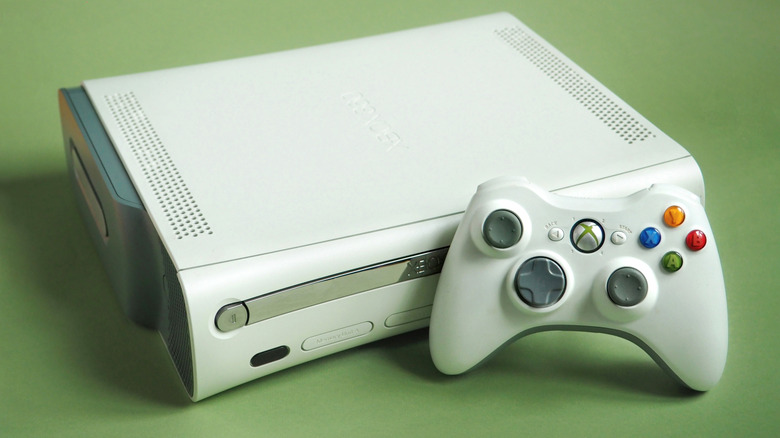
Since taking a crack at gaming in 2001, Microsoft has rolled out nine distinct Xbox variations across four generations (not including different SKUs like the Xbox 360 Arcade). From the jump, the line has introduced new ideas that (literally) changed the game, like revolutionizing online console gaming, introducing achievements and launching a subscription-based game library with Xbox Game Pass.
With it being 25 years since the first console and its little shooter game about aliens hit shelves, it's a great chance to take a trip down memory lane. While details about the next Xbox are still up in the air, now's the time to reminisce. Let's start at the top, from the days of the Duke controller to "everything is an Xbox."
Xbox | November 15, 2001
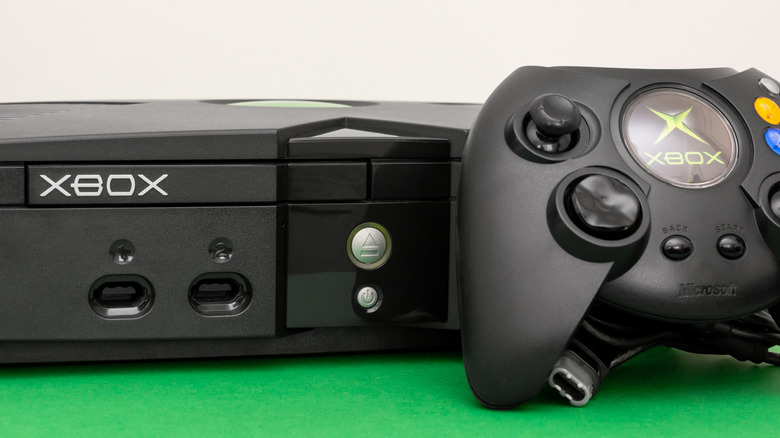
In 2001, the original $300 Xbox went toe-to-toe with Sony and Nintendo, who had released the PS2 and GameCube in the US within a 13 month-period. The sales affirm that the PS2 was by far this generation's most popular console — and the best-selling console of all time, in fact. But Microsoft deserves tons of credit for the high standard it set for online gaming with Xbox Live, which launched in late 2002.
With just $50 a year and an active internet connection, gamers could play Halo: Combat Evolved and more with friends or randoms; the exclusive series alone was often enough to draw people into buying an Xbox. According to a Microsoft press release from 2003, the service had over 300,000 subscribers within four months, outperforming the PS2's network adapters by nearly 50 percent in subscriber count.
By mid-2005, a few months after Halo 2 was released the holiday season prior, the service had a whopping two million subscribers. And while that's wildly impressive, it wasn't the biggest news to come from Xbox that year.
Xbox 360 | November 22, 2005
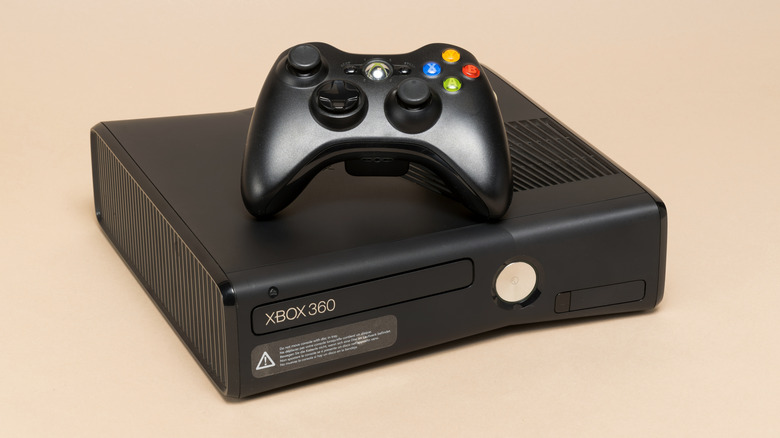
The Xbox 360 launched in 2005 in two configurations. The $400 Premium had a wireless controller and a detachable 20GB hard drive pre-loaded with a few goodies. Meanwhile, the $300 Core had a wired controller and no hard drive, forcing owners to buy one separately or use a memory card for save data.
After the PlayStation 3 and Wii came out in 2006, Microsoft upped the ante in 2007 with the pictured Elite configuration. It featured a matte black finish, a 120GB hard drive and, arguably most important of all, an HDMI port.
Then in 2010, Microsoft released the 360 Slim, tackling the original's infamous overheating problem that often led to the Red Ring of Death. This revamped model had a whole new cooling system and up to 320GB of storage. Ultimately, Microsoft ushered this famed generation out with the 360 E in June 2013, introducing a sleeker design just months before the Xbox One arrived.
Even with the Red Ring, Microsoft's second-gen console remains its best-selling ever, with at least 84 million units sold. This generation rolled out features like achievements and Gamerscore, rewarding progress and often giving a reason to revisit games. Speaking of which, the Xbox 360's now-iconic exclusive games may be coming to PC, giving us a chance to replay hits like Halo 3, Fable II, Gears of War and Forza Motorsport 2.
Although the Wii is often viewed as the biggest reason for motion-control gaming going mainstream, Microsoft's Kinect tried taking the idea in a new direction in 2010. It tracked the player's whole body with a camera, rather than a sensor bar only tracking a remote. While it was optional to start, Microsoft had different plans when the next generation arrived.
Xbox One | November 22, 2013
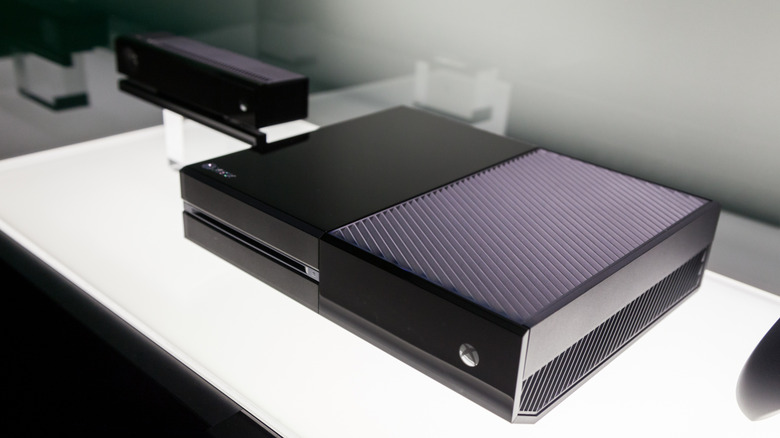
Microsoft gambled out of the gate when it revealed the Xbox One in summer 2013, planning to bundle the $499 console with a Kinect 2.0 and forcing players to keep the motion camera plugged in. Before the console hit shelves in November, the company reversed this and asserted that Kinect wouldn't be necessary, to the delight of many. Come 2014, the company dropped the Xbox One's price to $400 and stopped bundling the two.
The console also answered a long-running taunt from PS3 owners with its built-in Blu-ray player. It also came with a 500GB hard drive and a slightly redesigned controller with new thumbsticks, impulse triggers and other upgrades.
Over the generation, the Xbox One got a few hardware upgrades. The $399 Xbox One S arrived in 2016 with no dedicated Kinect port. Failed accessories aside, this iteration notably brought 4K support to the table, now featuring a 4K Blu-ray player, 4K streaming capabilities and 1080p upscaling. Plus, it was 40 percent smaller than the huge original model.
Then in 2017, the $499 Xbox One X became Microsoft's first console to deliver native 4K gameplay, with HDR support to match. To make the most of this, Microsoft rolled out Xbox One X Enhanced versions of many titles, offering higher resolutions and frame rates. But since not every re-released game took full advantage, native 4K support varied by title.
Xbox Series X and S | November 10, 2020
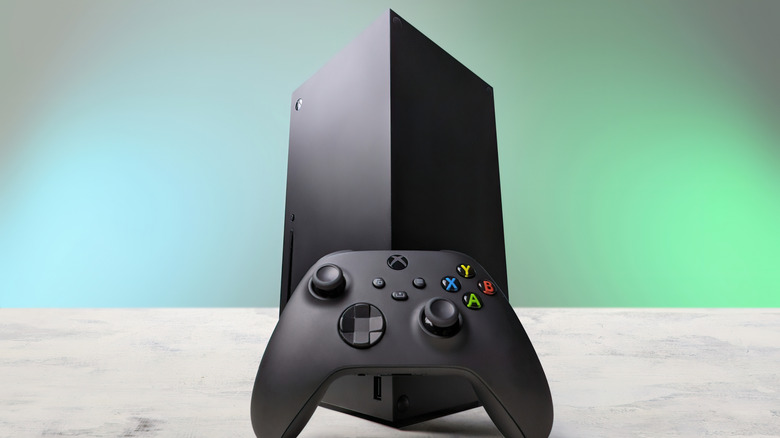
The Xbox Series X was unveiled in 2019, a year before hitting shelves for the 2020 holiday season at $500. Self-positioned as Microsoft's fastest and most powerful console to date, it promised ultra-low latency and native 4K gaming that could max out at 120FPS, as well as eventual support for 8K capabilities (though 8K is essentially dead now).
A year after the Series X was announced, and just two months before its release date, Xbox revealed the $300 Series S, a much cheaper take on the console. Since it lacks a disc drive, this digital-only model is better suited for Game Pass subscribers and anyone who doesn't care to buy physical copies. Microsoft says resolution is the key difference between models: the Series S maxes out at 1440p and can only upscale games, not offer true 4K gaming capabilities.
These days, after several price increases, the Series S starts at $500 for the 512GB system, while the Series X is $750 for the digital 1TB console or $800 with a disc drive. And serving as a perfect bookend to this timeline, Microsoft celebrated the OG console's 25th anniversary this year with a translucent green Series X, an homage to the iconic model from 2001.