

AMD vs. Intel CPUs: Which is the better buy in 2026?
You'll need to take your budget, workload and upgrade preferences into account to decide which is right for you.
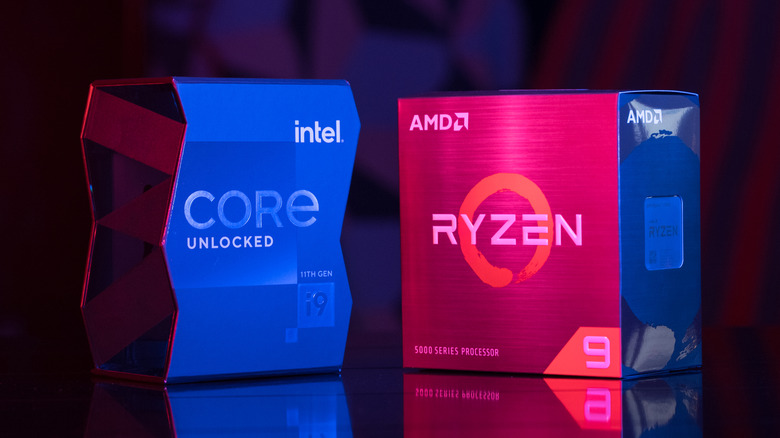
If you ask PC gamers which company makes better processors, most of them will point to AMD. Its X3D chips have become the default option for gaming rigs, but the shipment numbers make the story more complicated.
According to Mercury Research, AMD's share of desktop CPU shipments reached 34.9 percent in the second quarter of 2026, which means Intel still accounted for roughly two out of every three desktop processors shipped during this duration. In the laptop race, the difference is even greater, with Intel shipping significantly more than AMD.
But there's no single winner here. Whether you should opt for an AMD or Intel CPU boils down to your preferences, budget and what you actually need the chip for. It could be chasing frame rates, editing videos on the fly or just keeping a few dozen browser tabs open.
How we compared AMD and Intel CPUs
We pulled results from trusted hardware reviewers, including Tom's Hardware, TechPowerUp, Notebookcheck, TechSpot and PCWorld. These sources stress-tested the chips through the same games and workloads on comparable test benches. The consistency reflects the actual potential of the chips in real-world scenarios, and that AMD and Intel chips can be compared directly. Testing covered two sides of how people use their PCs: games (where frame rates are the main measure) and creative tasks like rendering, video exports and multitasking.
We compared each brand's chips across three tiers: low-end offerings around $200, midrange chips around $300, and high-end units from $450 to $700. This includes AMD's Ryzen 9000 series (along with its high-end X3D gaming models), the Intel Core Ultra 200S Plus desktop chips, Intel's flagship Core Ultra 9 285K and Intel's latest laptop processors. Older chips only show up where they're still relevant in the buying decision.
Prices listed are launch prices unless otherwise noted. CPU prices change constantly, and the ongoing memory and storage price hikes have pushed full system prices higher, so check what retailers are charging today before you buy.
Inside AMD's Zen 5 and Intel's Arrow Lake chips
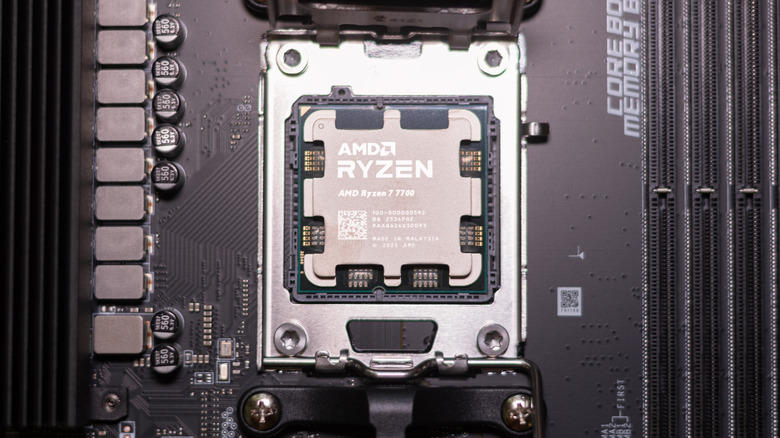
AMD and Intel have taken different routes to building a modern-day desktop processor. Their differing architectural design choices are reflected in the benchmarks, with each serving a dedicated purpose.
AMD's 9000 chips are built on its Zen 5 architecture using chiplets, which means smaller pieces of silicon packaged together into a single processor. An 8-core compute die handles the processing, while a separate I/O die manages the connections to memory and the rest of the PC. The higher-end variants of the chip, like the Ryzen 9 9950X, house two compute dies. Every Zen 5 core has the ability to run two threads (streams of instructions) at once, which suggests the 8-core Ryzen 7 9800X3D handles 16 threads.
The X3D versions add AMD's signature feature to the mix: a 3D V-Cache. Cache is a small pool of ultra-fast memory built into the processor; the more of it a chip has, the less it has to wait for the system's slower RAM, which makes certain operations faster than others. X3D chips stack an extra 64MB cache die on top of the 32MB that comes standard on the processor itself, for a total of 96MB of L3 cache. With Zen 5, AMD moved that cache die below the cores instead of on top, which lets the cores dissipate heat more easily. That's one reason why the 9800X3D boosts to 5.2GHz, up from 5GHz on the older 7800X3D variant.
Intel's Arrow Lake chips, which are branded under the Core Ultra 200S series and refreshed as the 200S Plus, split the processor into tiles. These are separate pieces of silicon for computing, graphics, and input and output, all mounted on a single shared base. Intel outsourced the tile manufacturing to TSMC and only packages them together when they're ready.
Intel blends two kinds of cores together: performance and efficiency. Performance cores handle demanding single tasks, while the smaller efficiency cores pick up background and parallel work. The Core Ultra 7 270K Plus has 8 performance and 16 efficiency cores. However, Intel dropped its Hyper-Threading feature, which was its version of running two threads per core. This means the chip runs 24 threads across its 24 cores. It houses 36MB of L3 cache, well short of what AMD's X3D chips offer.
AMD went big on cache memory, which games love. Intel focused on core count, which pays off when you're exporting video, compiling code or juggling heavy apps. That trade-off is straightforward.
AMD is the clear pick for gaming

If your priority is gaming, your decision will likely lean towards AMD. Its X3D chips are the fastest gaming processors you can buy, and the difference isn't particularly close.
The gap is clear when you compare the chips across generations. AMD's Ryzen 7 7800X3D launched in 2023, and you can buy it today for roughly the same amount as Intel's mid-ranger. Based on recent street prices, which are estimates, the 7800X3D typically sells for around $300 to $350, while the Core Ultra 7 270K Plus goes for about $250 to $300. For about the same dough, the older AMD chip still runs games about 10 percent faster than the 270K Plus in Tom's Hardware's testing. That number is an average across the full game suite, so the gap will be bigger in some games and smaller in others.
Another major feat is how AMD's chip performs better while consuming much less power. In the same testing, the 7800X3D delivered 68 percent more frames per watt than the 270K Plus, which means that it gets more performance without using significantly more electricity.
At premium price points, the performance gap is the widest in Tom's Hardware's testing, with AMD's $699 Ryzen 9 9950X3D averaging around 37 percent faster at 1080p than Intel's flagship Core Ultra 9 285K, which costs $589. If you're dedicated to gaming only, the fastest chip you can buy is the $499 Ryzen 7 9850X3D, which Notebookcheck crowned the best gaming CPU on the market, though its lead is only marginal compared to the $479 Ryzen 7 9800X3D.
Intel is the better value for everyday use
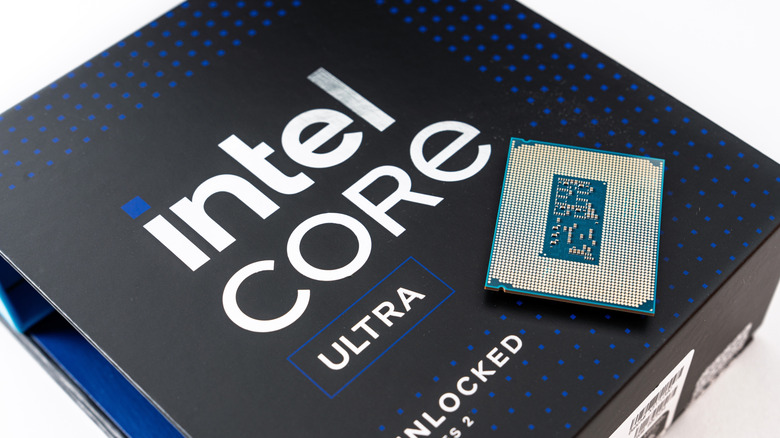
Not everyone is looking to game, which is where Intel fights back, especially by offering lower prices.
At the low end, Intel's lead is particularly evident. Hardware Unboxed's testing revealed an 85 percent lead for the $199 Core Ultra 5 250K Plus over AMD's Ryzen 5 9600X in Cinebench 2026's multi-core test. This PC stress test simulated the kind of all-core load you get when rendering or exporting. That's the best case for Intel, since this is exactly the sort of task its extra cores are built for.
In the midrange category, Intel's $299 Core Ultra 7 270K Plus goes head-to-head with AMD's Ryzen 9 9950X in creative apps and multitasking. The AMD chip launched at $649, which is more than twice the price of Intel's. In Notebookcheck's Blender testing, a 3D rendering benchmark that leans heavily on core count, the two chips performed more or less the same. Against AMD's similarly priced Ryzen 7 9700X, the 270K Plus brings three times the cores (24 to eight).
Differences even out in the top-end category. Notebookcheck found the Ryzen 9 9950X3D and the Core Ultra 9 285K neck and neck in Cinebench's single-core and multi-core tests, while Tom's Hardware found the 9950X3D beating Intel's chip in many of its productivity tests.
For most people, the lower-end tiers matter more. Exporting photos, editing videos, compiling code and running a plethora of browser tabs alongside Slack and Spotify are tasks where more cores pay off every day. However, AMD's gaming edge matters the most if you're after higher fps in competitive shooters.
How the pricing categories break down
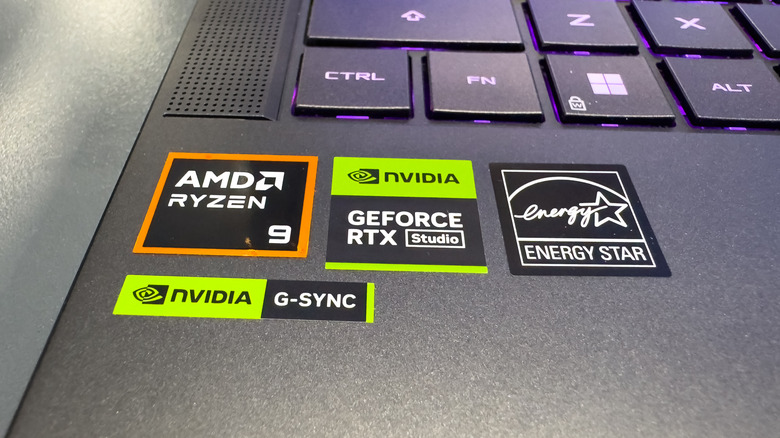
Let's look at where each tier lands once you factor in price. At around $200, Intel's $199 Core Ultra 5 250K Plus is the stronger all-rounder, roughly matching the Ryzen 5 9600X in games and pulling far ahead in heavy work. The performance output results in games vary by reviewer, with TechPowerUp finding the two on par and Notebookcheck's game tests putting the 9600X ahead. The 9600X makes sense if you're building a gaming-only PC and want to stay on AMD's platform for years to come.
In the ballpark of $300, the Core Ultra 7 270K Plus matches or slightly outperforms AMD's Ryzen 7 9700X in games, so it's the right pick for the best of both worlds. If gaming is your main priority, the Ryzen 7 7800X3D now sells in the same range and is the better buy.
In the $450 to $700 range, AMD has more than a single reason to shine. The $479 Ryzen 7 9800X3D and $499 Ryzen 7 9850X3D are the chips to buy for gaming. The $699 Ryzen 9 9950X3D brings the blend of gaming and creative work in one chip. Intel's $589 Core Ultra 9 285K only makes sense if you rarely game.
You don't need a high-end chip

There's no guarantee that spending more on a processor brings more value. Notebookcheck found in its testing that the older 7800X3D plays just as well as the higher-tier Ryzen 7 9850X3D while costing $115 less. The same notion holds true against AMD's flagship, as the 7800X3D matched the 9950X3D in gaming for $250 less.
The 9950X3D only makes sense if you want top-tier gaming alongside heavy creative work, like a streamer who edits their own videos. Its 16 cores (twice as many as the 8-core X3D chips) help in rendering and encoding, so you're paying for extra horsepower outside of games.
Intel has given its customers a similar explanation. It confirmed it will not release a Core Ultra 9 290K Plus because the 270K Plus and 250K Plus are positioned to deliver strong gaming performance and value. The 285K costs about twice as much as the 270K Plus, even though the 270K Plus holds its own against AMD's 16-core chips in creative work.
With memory prices where they are, every dollar you save on the CPU is one you can put toward a better graphics card, which is the wise choice today.
Why Intel CPUs still rule laptops

The laptop world behaves differently than the desktop market, and Intel currently has a clear lead over AMD in notebooks. Intel is shipping about 7 out of every 10 laptop processors, as per estimates from Mercury Research.
At the budget end, Intel's Core Series 3 chips power mainstream models like Acer's Aspire Go and the Asus Vivobook lines. Intel rates them for 12.5 hours of office work and 18.5 hours of Netflix streaming. Higher up, the Core Ultra Series 3 chips, codenamed Panther Lake, launched at CES 2026 as the first chips built on Intel's 18A manufacturing process. They have impressed reviewers so far with their power efficiency and battery life; PCWorld reported getting about 22 hours out of an Asus Zenbook Duo.
Notably, Intel CPUs are no longer used in Macs, as Apple has moved every modern Mac to its own custom silicon. 2025's macOS Tahoe is the last major update Intel Macs can receive. If you're still on a Mac with an Intel chip, Tahoe should be supported with security patches through September 2028.
AMD makes upgrading easier
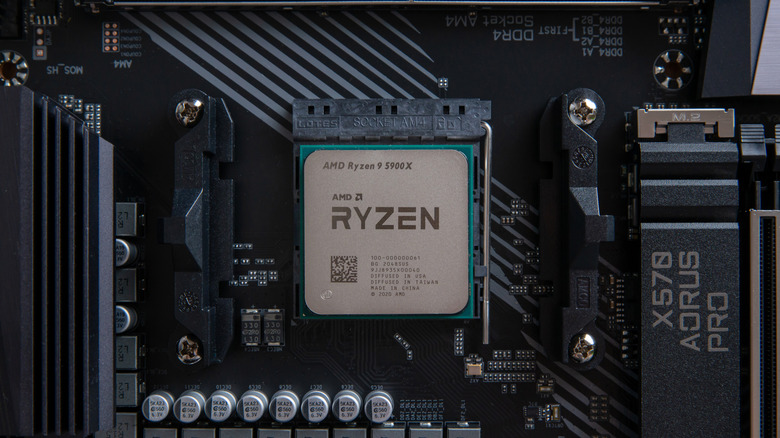
This is AMD's underrated advantage, and it matters more than any benchmark no matter the tier you're shopping for.
If you opt for AMD's AM5 platform today, you'll likely be able to snap a faster chip into the same motherboard years from now. That means a budget Ryzen 5 build can later become a high-end X3D build without replacing the board. AMD has promised to support AM5 through 2029, extending its earlier commitment that ran through 2027. While that doesn't necessarily mean every older motherboard will support every future chip, the company's track record with AM4, which ran for nearly a decade, is encouraging.
That saves money over time for you as a builder, especially when memory prices are hiking. Windows Central estimated that a new AMD gaming build costs about $900 once you add RAM and a motherboard, with memory alone accounting for roughly $400 of the total and the board around $200. If you already have an AM5 system, a CPU swap lets you keep your existing RAM and motherboard to skip most of that cost.
Conversely, Intel has no announced upgrade path. Its CEO, Lip-Bu Tan, stated that the next-gen Nova Lake chips will arrive by the end of 2026, but the investor relations chief has given a slightly later due date, running from late 2026 into 2027.
The AMD and Intel CPUs to avoid
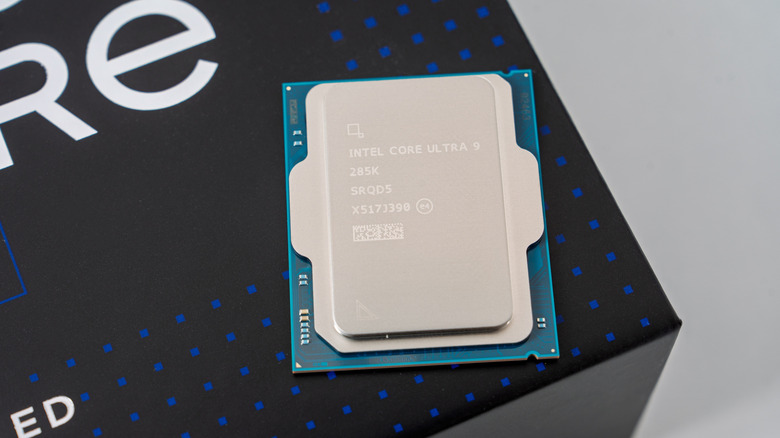
Not every chip you see on the shelf is worth your money, and a few deserve a hard pass. Intel's 13th- and 14th-gen desktop chips had a flaw that pushed too much voltage through the processor, which caused crashes and permanent damage over time. Intel released microcode updates to fix the issue, but it couldn't undo damage already done. To rebuild trust, Intel extended the warranty on affected chips from three years to five.
Core i7 models from the same generations are still decent buys at a steep discount, as long as you install the latest BIOS before doing anything else. Be extra careful when buying a used chip, since you can't know how the previous owner treated it.
Intel dropped the "i" and now splits its lineup into Core 7 and Core Ultra 7, which are different families. The Core 7 is the mainstream line, while the Core Ultra 7 is more premium, so be sure to check the model number and not just the badge.
Based on value alone, it would be wise to skip AMD's Ryzen 7 7700X3D. It launched at a price of $330, but Tom's Hardware found the faster 7800X3D selling for about the same price. This means there's little reason to settle for less at roughly the same cost. Likewise, avoid Intel's original Core Ultra 7 265K, which the new 270K Plus beats by 23 percent in multithreaded work. If you see a 265K on sale, the 270K Plus is worth the small premium.