

Your EV's battery is big enough to run your house — here's what stops most people
Getting the energy into the house can be complicated and expensive.
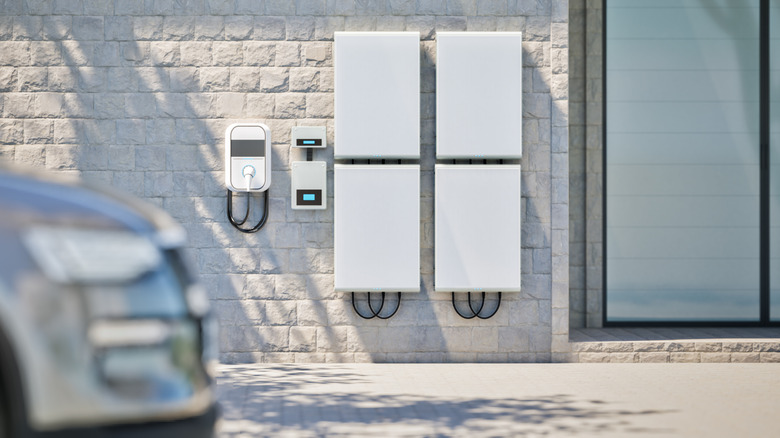
Most EV batteries have significantly more capacity than a standard home battery, so it makes sense to consider running the house with your car. But there are caveats. You have to consider the EV's battery capacity, power output and vehicle-to-home (V2H) compatibility. Battery capacity is measured in kilowatt-hours and helps determine how long you can keep things running. Power output is measured in kilowatts and determines which appliances you can run at the same time. The V2H system also needs to handle the brief startup surge when appliances such as air-conditioners and refrigerators kick on. The numbers are important, especially for startup surge.
Those numbers don't matter much, however, if you can't get energy out of the vehicle. To turn your EV into a home backup system, it must support bidirectional operation and come with a compatible V2H system. A typical charging connection doesn't necessarily work in reverse. Your charger also must be bidirectional and include DC-to-AC inverter hardware and an islanding/transfer switch.
V2H, powering your whole home, is often confused with vehicle-to-load (V2L), which powers individual devices using an EV. With V2L, you can power a refrigerator or your favorite electric foot massager. Some EVs can supply household circuits through a built-in power outlet and compatible transfer equipment, but this requires an approved installation and doesn't mean you can plug your EV into a standard wall outlet. All of this is to say that it's a little more complicated than a standard plug-and-play setup. And it doesn't end there.
The house needs upgrades too
Even with the perfect car, a whole-home or selected-circuit backup requires compatible power conversion equipment and, of course, a safe way to disengage the home from utility power. The point is to power your home, not energize grid wiring during an outage. Setup can get a little pricey as well. Depending on the system, you're looking at a bidirectional charger, inverter and a gateway, plus the electrical work and potential permits. You may also have to fork over more cash for panel or wiring upgrades.
Everyday limitations complicate things further. The car has to be at home, obviously. It has to be connected and sufficiently charged. Every unit of energy used by the house is energy no longer available for driving. Air-conditioning and electric heating are heavier workloads and will gobble up runtime substantially. You have to consider battery wear too. It shouldn't overshadow emergencies when you have to do what you have to, but frequent usage is a compromise in the long run.
Which EV can power your house?
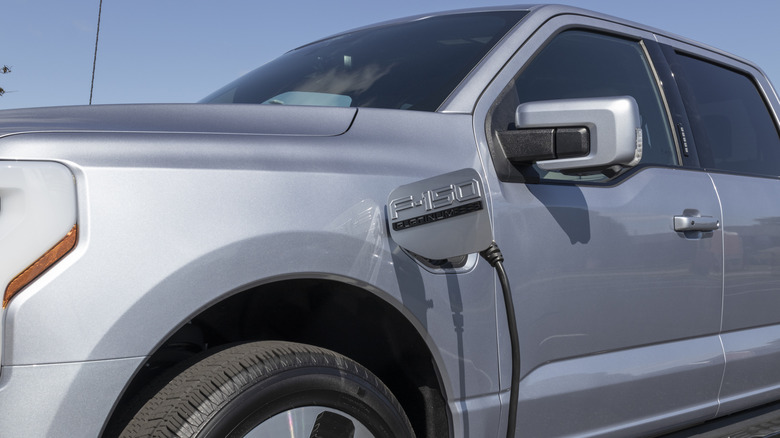
Compatibility is key, and adaptation is necessary when compatibility is lacking. You can't play a PS5 with an Xbox controller right out of the gate. You need a third-party adapter. The same holds true for EVs powering homes. Before purchasing an EV with home backup in mind, make sure the required equipment is available and that an installer can commission the system at your address. House hardware, local availability and vehicle support all have to be in sync.
Compatible GM EVs work with the GM Energy PowerShift Charger and V2H Enablement Kit. Kia offers an EV9 setup using Wallbox's Quasar 2 charger and Power Recovery Unit. Tesla's Cybertruck supports PowerShare through a compatible home installation, and Tesla now lists Model 3 and Model Y support with Powerwall 3. Unfortunately, most of these are not interchangeable. Everything has to match. And all of them cost thousands of dollars.
Where you live plays a role as well. Some manufacturers' bidirectional services are market-specific. For instance, Polestar introduced bidirectional charging in PoleStar 3 EVs for those living in California. So don't get excited about EV-to-home features only to make the purchase and learn you're in the wrong state. Make sure the model and model year support outage backup at your address, and make sure you grab an installation quote.