

Can you use WD-40 on your electronics?
The short answer: no. The long answer: there's a different WD-40 product you can use.
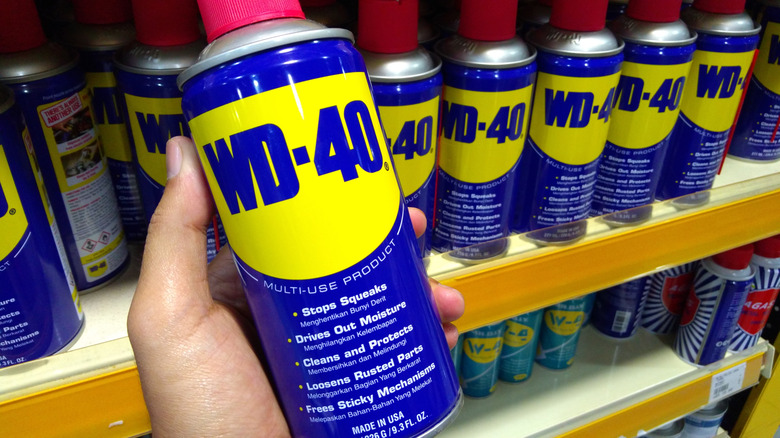
It can quiet your hinges, get rid of rust and even help break apart stuck LEGO bricks — WD-40 is the magic spray that can do just about anything. It has been around since 1953, originally developed for use in the aerospace industry (specifically, protecting the exterior of the Atlas Missile from rust and corrosion), and has become a staple in just about every home. However, when it comes to your electronics, WD-40 is one of the worst possible cleaners you could reach for.
Though the "WD" in the product's name stands for "water displacement," as a whole it contains a mix of petroleum-based lubricants and anti-corrosion ingredients alongside those designed to displace water; this is why it excels both at lubrication and cleaning. From its inception in the '50s, the company has grown exponentially, expanding both the ways customers can buy regular WD-40, like various bottle sizes and applicators, as well as adding new products to the line-up like other specialized lubricants and degreasers. Nowadays, there are some products the company makes that are more suitable for your electronics, but the original formula should stay far away from them.
Why you shouldn't use WD-40 on your electronics
There are multiple reasons why WD-40 and sensitive electronic parts don't mix. For one, it can be completely counterproductive when it comes to cleaning, as its unique chemical makeup leaves a residue behind that can actually attract more dust and dirt over time. This residue is great when used for something like greasing a hinge, but much less so on your devices. It might look clean at first, but that area is now going to be a grime magnet and just worsen the problem you were attempting to solve.
Even worse is that the residue left behind is both electrically conductive and flammable. This means that your device is essentially now a ticking bomb, not only for future grime but actual hazardous reactions, particularly if you've used it to do something like clean a USB port and it has reached key internal parts. Eventually, the residue's conductivity could cause a component to short out, or in extreme cases cause an electrical fire. As a whole, using WD-40 on your electronics is all drawbacks and no benefits.
What to use instead of WD-40 to clean your electronics
If you're steadfastly dedicated to the WD-40 brand, they do offer an alternative you can safely utilize with your electronics. WD-40 Specialist Contact Cleaner is designed to leave no residue, be nonconductive and dry quickly, eliminating all the pitfalls associated with the original WD-40. It's not the only contact cleaner on the market, but for those who trust the brand and enjoy their straw-based applicator design, it's a solid choice.
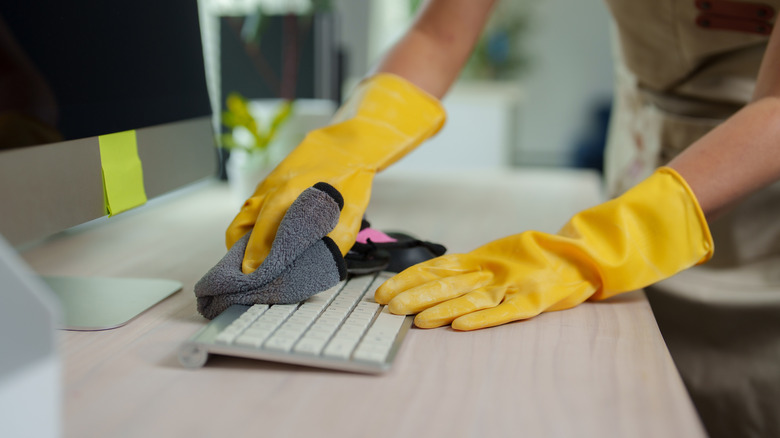
However, a specialized product isn't necessarily a must-have purchase when it comes to keeping your electronics clean. An arsenal consisting solely of high-proof (90-99%) isopropyl alcohol for use on dirty components and a can of compressed air, which is great for things like cleaning laptop fans and keyboards, is generally enough to satisfy most needs, especially when paired with a good-quality microfiber cloth. For a deeper look at the best way to clean your devices, check out how to properly sanitize your tech.