

Why you should never point a laser pointer at any aircraft
Unfortunately, some people need to hear this.
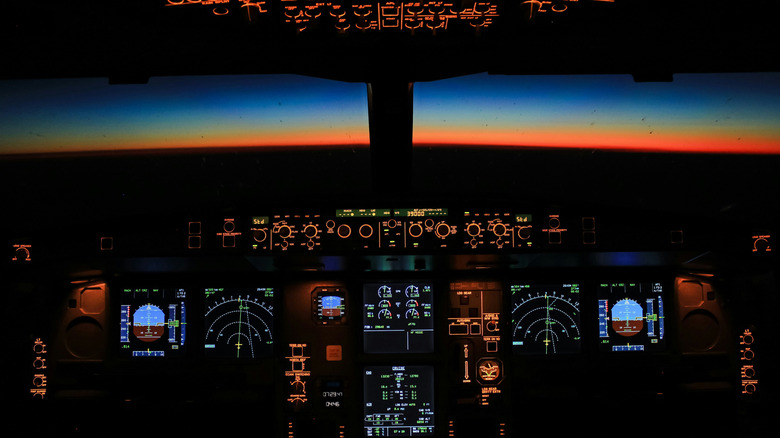
Aiming a laser pointer at an aircraft is a terrible idea. Contrary to popular belief, pilots are not, in fact, cats. Nor are they here for your PowerPoint presentation. They're humans performing a difficult, high-stakes job, and laser beams can interfere with their vision, risking lives for what amounts to juvenile mischief.
Hopefully, you don't need a lecture explaining the ins and outs of laser physics to understand the danger. But curious minds might want to learn a bit more about how a tiny beam from a $10 gadget can ruin a pilot's night and land the perpetrator in prison.
From tiny beam to windshield-sized flash
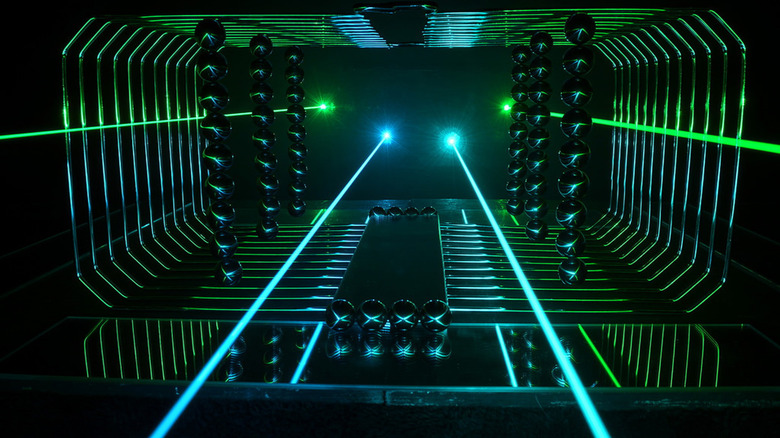
At normal distances, laser beams look like they stay perfectly narrow, but they spread out gradually as they travel. After a mile or two, what began as a tiny dot a few feet away may have grown to several feet across.
It's easy to imagine pilots seeing an annoying but harmless dot in the cockpit. But the reality is much scarier. Between the beam's increased size and the aircraft's scratched and curved windshield, the pilot might see a window's width of light glowing and cascading across their field of view. An imperfect analogy would be driving toward an intense desert sun that's low in the sky. Now imagine trying to land a plane like that, with the lives of hundreds of passengers in your hands.
These incidents also tend to happen at the worst time. Handheld lasers mostly hit low-flying planes, which are taking off or landing. Plus, they usually happen at night, when the pilot's pupils are already dilated. A laser lighting up the cockpit can cause flash blindness for a few seconds or longer, right when there's the least room for error.
Helicopters arguably have it worse. Police, medical and news choppers often fly low over neighborhoods, including at night, making them a prime target for anyone with a laser pointer and questionable judgment.
So yeah, don't be that person.
Why flashlights don't pose the same risk
A laser keeps its light concentrated for miles, expanding only gradually. Even a weak pointer can mess with a pilot's vision from about two miles away. A flashlight, on the other hand, spreads in a wide cone from the moment it leaves your hand.
Point your average flashlight at a plane all you want. It won't do much.
If nothing else, there's self-preservation

Unfortunately, plenty of people still point lasers at aircraft. Pilots reported nearly 11,000 laser strikes to the FAA in 2025 alone. The agency considers that number progress, since it dropped by 14 percent from the previous year. At the time of publication, nearly 6,000 have been reported in 2026.
Given the danger to everyone on board a laser-struck aircraft, the law takes this seriously. Aiming a laser pointer at an aircraft has been a federal crime in the US since 2012, punishable by up to five years in prison and fines of up to $250,000. The FAA can add civil penalties of more than $30,000 per violation, and states can levy their own penalties.
But who's going to get caught, right? Well, it's not as much of a long shot as you might think. Police helicopters carry infrared cameras that can trace a beam back to its origin. After all, lasers draw a bright line pointing right back to the person holding them. Just this year, a New York man was sentenced to 18 months in prison for pointing a laser at a Delta flight, and an Arizona resident got 10 months for pointing one at US Air Force F-35 jets. In that case, an FBI surveillance plane captured video of the laser strikes coming from his residence.
So, for crying out loud, keep your laser pointer limited to cat-play, presentations and science demos. And if you must act like a doofus, there are plenty of ways to get that out of your system that don't put lives at risk.