

The Fitbit Edge lacks a useful contactless feature
It's handy, but most people likely won't miss it.
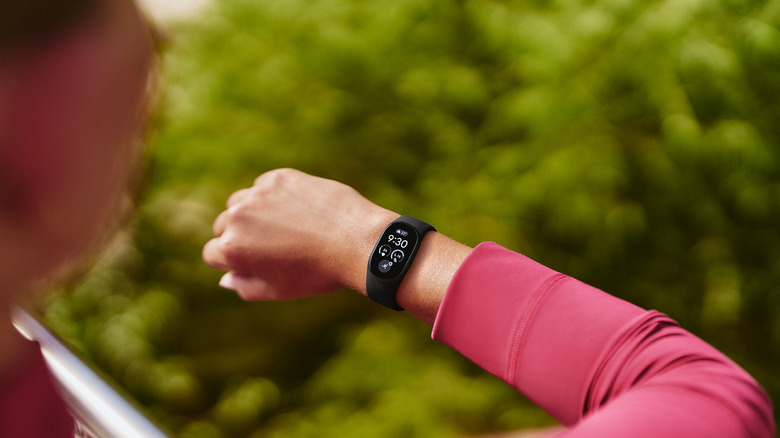
The Fitbit Edge is the brand's latest fitness tracker, combining a slim and sleek band design with a small screen reminiscent of earlier models like the Fitbit Charge 6. In fact, this model is essentially an upgrade of the Charge 6. It's not as feature-rich as a Google Pixel Watch 5 (see our Pixel Watch 5 review) but unlike the screenless Fitbit Air, another new fitness band, it has a 1.34-inch AMOLED screen. You can start and stop workouts from the screen, check your stats and vitals, see notifications and even access Google apps like Google Maps. But there's one contactless feature missing from this device.
The Fitbit Edge does not have a Near-Field Communications (NFC) chip, the short-range technology that facilitates a "tap" connection between two devices. It's what allows you to pay for items at a coffee shop or even the subway using your phone and certain wearables. With devices that have NFC, you can open the virtual wallet and hold the screen up to a contactless terminal to scan and complete payment. It's a convenient feature that's omitted from the Fitbit Edge. But while some people might miss it, there's a reason Google left it out.
Why there's no NFC
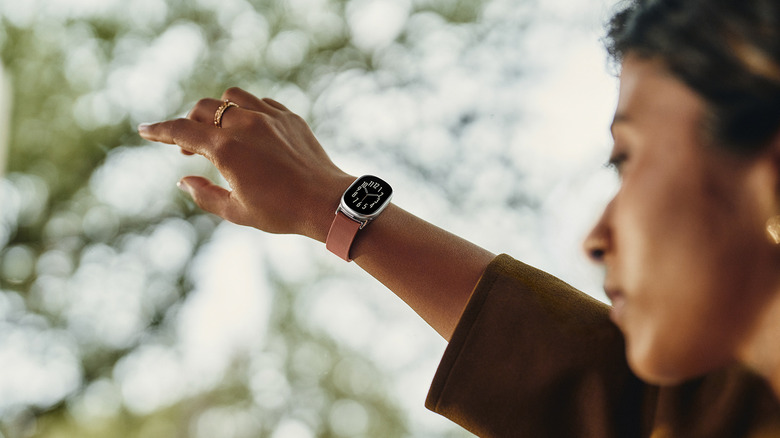
NFC for tap-to-pay is useful when incorporated into a smartwatch or fitness tracker. But Google has addressed why it didn't include this chip in the Fitbit Edge. The company says that when analyzing user data for the Fitbit Charge 6, fewer than a single percent of owners said they used NFC. So, rather than focus energy on adding NFC to the Edge, Google shifted its attention to including other "highly requested features" for the tracker instead.
This includes features like Health Guardian, part of the updated Google Health app, with blood pressure and insulin resistance trends, intelligent automatic activity tracking, improved GPS tracking for walks, runs, cycles and other outdoor activities, and even a replaceable battery. Outside of health-related features, you can access things like media controls and message notifications using the Fitbit Edge's screen. It is, however, also missing some safety features like fall and crash detection, which are available on the Pixel Watch 5.
It's worth noting that when comparing the Fitbit Edge to Fitbit Air, the Fitbit Air also lacks NFC, which makes sense since it doesn't have a screen to access the app anyway. Both are missing this nice-to-have but not need-to-have feature.
Which Fitbits have NFC?
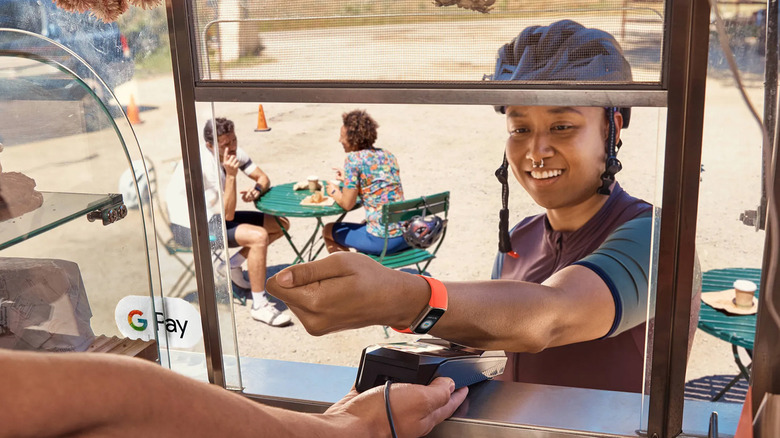
If you are looking for a Fitbit that has NFC, there are older models that fit the bill. The Fitbit Charge 6, introduced back in 2023, does have NFC as does the previous generation Fitbit Charge 5 and its now out of circulation predecessor, the Fitbit Charge 4. Even special editions of the Charge 3, introduced way back in 2018 and phased out in 2020, have NFC. The Fitbit Sense, Sense 2, Versa 2 and Versa 4 as well as later editions of the original Versa are all smartwatch designs and include NFC, too. Note that the early devices previously worked with Fitbit Pay, but Google shut down that service in 2024 and replaced it with Google Wallet. Of course, all Pixel Watches come with NFC as well.
Google Wallet is the only tap-to-pay service you can use with Fitbit. Even though these devices can connect to the Google Health app downloaded to an Apple iPhone (Pixel Watches excepted), you cannot access Apple Wallet from any of them.
Since fitness trackers are typically purchased by those who want to focus on health and wellness versus apps and notifications, it makes sense that Fitbit has decided to omit the NFC chip from the Fitbit Edge. Most people use their phones for tap-to-pay anyway. It's convenient to hold out your wrist to pay, especially in places like at a gym where your phone might be tucked away in a locker. But based on usage stats from those who owned the Fitbit Charge 6, the lack of NFC chip in the Fitbit Edge is unfortunate, but it won't be hugely missed.