

What are the downsides of a foldable electric bike?
This form factor comes with some trade-offs.
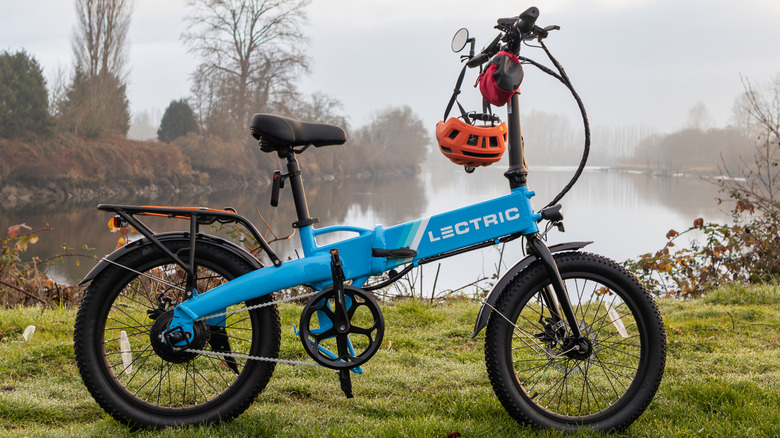
Electric bikes take some of the effort out of the daily commute, as well as giving you a bit more power for any long, leisurely journeys you're making. Storing them isn't the easiest, although a foldable electric bike can be a solution if you're short on space. You get a motor to help you with the pedaling, along with a frame that folds down to make it easy to stash in a luggage rack.
That said, there are some downsides to a foldable electric bike that you'll want to be aware of. Convenience does come with a few compromises, because a bike that folds isn't necessarily going to be easy to carry. The smallest models could involve sacrificing something, whether it's comfort or battery capacity. You've also got the price to consider, especially if you want the most ultralight bike you can find. Before you pick one up, here are some of the disadvantages you'll want to weigh up.
Folding it up won't make it lightweight
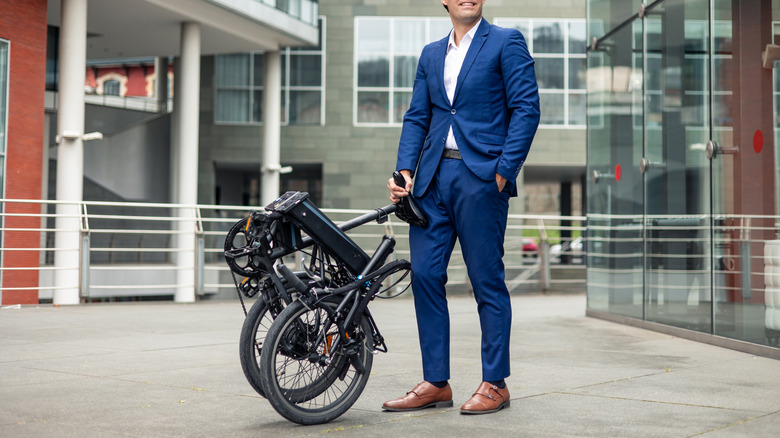
You'll need to separate bikes you can fold from bikes you can comfortably carry, because rarely will these two meet. A foldable electric bike needs a motor and battery, while its frame is going to need hinges and locking hardware. All of these contribute to the weight, even if it ends up taking less space.
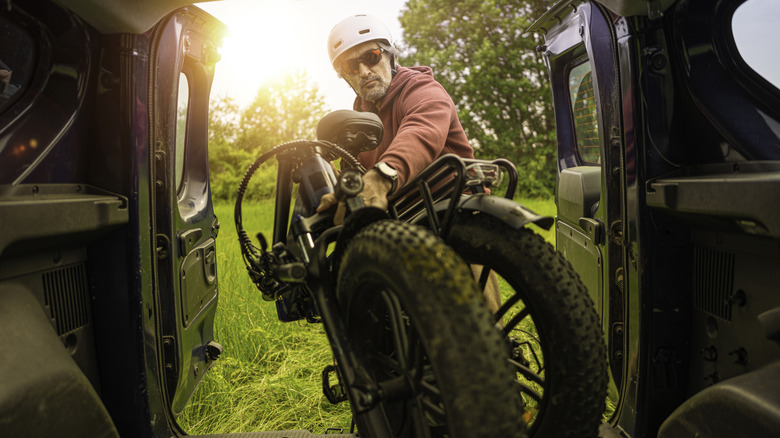
Here's an example. Lectric, which makes electric bikes, lists its folding XP4 with a 500W motor at 62 pounds, and that's without the battery. Adding that into the mix adds another seven pounds, taking it up to 69 pounds, or 31kg. That's a lot to lift into a car, let alone to hold while you're walking up flights of stairs to your office. You can remove the battery but even without it, it's still quite weighty.
How it folds will matter, too. You need to be able to comfortably grip it, and it needs to stay together while you're moving. Some let you wheel the bike while it's folded, which'll make it easier to move it around without having to carry its full weight, but there's no guarantee that it'll be easy to handle.
If you take public transport, you'll also have to factor in the rules that surround electric bikes. For instance, Amtrak's rules state that electric bikes must weigh no more than 50 pounds, which rules out heavier models like the Lectric XP4. And there are extras you'll have to consider. Your bike might have attachments, like a basket or bike-friendly pannier bags, that take up extra space, and you may need to remove them to make it safe to carry. Any attachments you do have can't exceed the bike's overall load limit, either.
It's probably a good idea to try before you buy to see if you can lift the folding bike with its battery installed, fold it and then carry it a short distance. While it's folded, measure it. You can then figure out where you're going to store it at home, along with the logistics involved to store it at work or on-the-go.
The ride can be less comfortable on rough roads
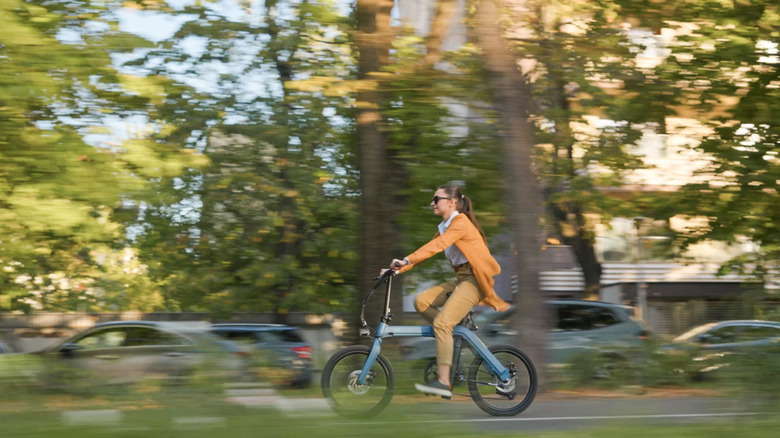
A compact folding bike will probably use smaller wheels to help it stay a manageable size while it's folded. That's useful when you're squeezing it under a desk, but the smaller wheels make rougher surfaces more noticeable. Broken roads and potholes are going to feel harsher than they would if you were riding a bike with larger wheels, especially if the model you've chosen has narrow tires and no suspension.
There's also the saddle to think about. It's not inevitable that the saddle will be uncomfortable just because the frame folds, but your riding position and the saddle's fit is still important. Are you able to sit comfortably while holding the handlebars, for instance? You'll see that manufacturers like Tern recommend getting both the saddle height and position right for a good ride. You'll need to check if the bike's adjustment range works for you.
There are bikes that offset these problems with wider tires, suspension and more. These'll help, but they add weight and bulkiness, which goes against the end goal of a bike that's small and light. You may end up preferring a bike that's easier to carry than a bike that you can ride for hours at a time.
This makes the route you take almost as important. Short trips on smooth roads are a different proposition than a lengthy commute over potholes. Rural riding isn't out of the question but a compact folding electric bike is likely to be poorly suited for rutted tracks or sustained rough ground. You can check with your bike's manufacturer to see what terrain they recommend for your bike's particular model.
As with comfort, testing is the key here. You'll need to pay attention to how your bike steers and breaks during a test ride, and ideally on surfaces similar to the ones you'll be riding on regularly.
Lower weight, longer range and upkeep can cost you
Folding models aren't automatically underpowered, but smaller bikes can mean choosing a smaller battery. This is where you'll want to compare actual battery capacity and motor specs. You'll want to treat the range as an estimate, too. Lectric, for example, says the XP4's range varies with the load, along with terrain and weather. Simply put, if you're riding on demanding roads, you might get less mileage. Smaller trips on smoother roads, with less luggage to carry, could take you further.
As for the price, expect to pay a premium for the best models. Premium folding e-bikes can cost thousands of dollars. For instance, Brompton's Electric C Line starts at $4,700 currently, with the lighter Electric P Line starting at $5,500, and the Electric T Line as high as $7,850.
Of course, just paying more for a folding bike isn't a guarantee that you're getting something that is lighter or with longer range, and the upkeep of your bike will cost you. The more maintenance you do, the smoother a ride you'll get long-term.
The usual tires, brakes and chains will need maintenance, but repeatedly folding and unfolding means you've got additional pressure points in the joints and clamps on your bike. These will need regular inspection; you don't want your bike to suddenly decide to fold in while you're mid-ride. Tern recommends regular servicing for these joints, along with checks for each ride. Any incorrect adjustments might damage the frame, so make sure to check the manufacturer specs before you make any.
If you're spending thousands on a bike, you're expecting longevity. No battery lasts forever, and you'll want to check how easy it is to source and replace the battery on your bike. The same applies for any of the components specific to your model, like the folding joints.
A foldable electric bike does have plenty of advantages. It can make traveling easier and your commute shorter. That said, you'll need to be realistic about how you'll use it and whether the compromises are really worth it.