

Stranger Than Heaven builds its identity as Like A Dragon's more relentless spin-off
We played several hours of Sega's next big crime-thriller, and so far the Like a Dragon series is getting its most bold entry to date.
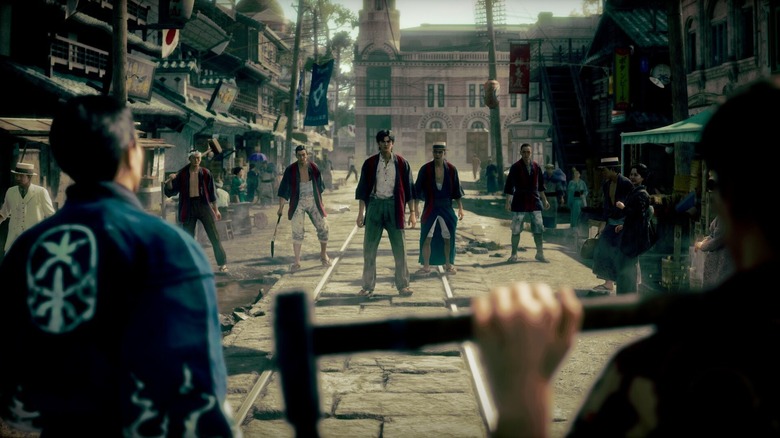
Stranger Than Heaven is the next game in Sega's sprawling crime-epic series Like A Dragon (formerly known as Yakuza in the US). On the surface, it looks like a grittier, more brutal take on the traditional Like a Dragon brawler action, but after extended hands-on time, I found myself thinking that Stranger Than Heaven's style feels much more grounded, and personal.
I recently spent several hours playing the opening chapters of developer RGG Studio's next entry in the crime saga, and it was clear that Stranger Than Heaven is about returning the series to its roots with a more relentless, character-driven story about an outsider making his way in early 1900s Japan. It took me a while to get into the Stranger Than Heaven's grittier crime-thriller flow, which leans heavily on a new, unusual combat system. Still, I couldn't help but be captivated by protagonist Makoto Daito's story of a stranger trying to embrace his ancestral land that's going through great change.
Japan, circa 1915, 1929, 1943, 1951, and 1965
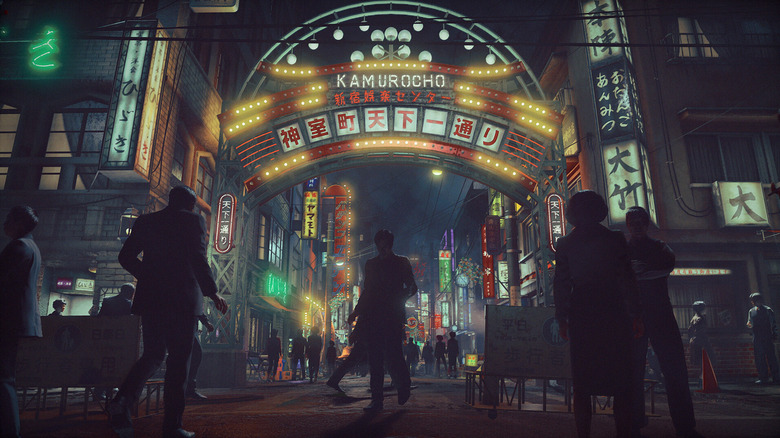
Spanning five decades, Stranger Than Heaven follows Makoto Daito's rise from a mysterious Japanese-American outcast to an infamous hustler and gangster in 1900s Japan. Starting from his traumatic life in the segregated United States, to his eventual arrival in Japan, Daito's growth leads him to being a scrappy dock and factory worker hustling on the streets of Kokura, to an up-and-coming nightclub owner and businessman in Osaka, and eventually to one of the key figures of the Tojo Clan in 1960s Shinjuku, shaping the lives of Kazuma Kiryu and Ichiban Kasuga in future entries.
Stranger Than Heaven is a standalone story, but it also offers some intriguing narrative flooring for the Like a Dragon series. As one of Sega's most groundbreaking franchises, it evolved from a cult-favorite action-brawler about protagonist Kazuma Kiryu's corrals with the Japanese criminal underworld, to a larger series where players navigate the streets of the fictional Kamurocho and the web of intrigue that shapes its future. The series also balances over-the-top action and goofy humor with its enduring protagonists, and its spin-offs tackle even more off-the-wall experiences, like turn-based RPG combat and arcade-style action, while keeping the serious tone.
Like a Dragon has always had a schlocky, silly undercurrent, even as it delivers earnest storytelling with heartfelt moments as players dive into the fun and culture of Japan's urban nightlife. Stranger Than Heaven focuses on a more serious storyline with Makoto Daito and his adventures in 1900s Japan; in many ways, it felt akin to a similar decades-spanning crime story like Sergio Leone's Once Upon a Time in America. Still, the familiar combat beats and activities of a Like a Dragon game are present, but with a deeper focus on immersing you in a world slowly stepping into the modern era.
Despite the energetic style and tone of the marketing around Stranger Than Heaven, the game's core story plays the material more straight than I expected. While there were certainly moments of levity and goofiness, the outlandish encounters and mini-games make Daito's story as an outsider in an initially unwelcoming early-to-mid 1900s Japan noticeably more stoic than other games in the Like a Dragon series.
Stranger Than Heaven really puts its narrative weight on Daito's perspective as an immigrant and mixed-race character with Japanese and White American ancestry. After fleeing from corrupt police officers in San Francisco in 1915, who accuse him of a crime he did not commit due to his race, Daito travels to Japan and discovers a different kind of racial prejudice and bigotry that he has to endure. This is an immediately effective perspective for a protagonist, especially in a Like a Dragon game.
It's structurally similar to previous games, where you explore semi-open-world towns with activities and fights outside the main story objective — all with the intent to draw you into not just the setting, but the different eras of time. With the added context of having to endure racial slurs and other forms of bigotry from townsfolk when exploring the town, and outright brutality from citizens who want to fight, it adds a new layer of immersion for Daito's story that's more grounded and unnerving than the likes of Kazuma and Ichiban.
However, the game's opening chapters occasionally lose pace and fall into clumsy storytelling moments due to Stranger Than Heaven's video game nature, which can undermine the subject matter. Moreover, the positioning of characters played by Snoop Dogg and Tupac (who wasn't seen in the demo) feels immersion-breaking due to the stunt casting, especially when the former's character and his crew dispense hard truths about bigotry while also trying to present themselves as almost fourth-wall-breaking figures. Still, I felt that RGG Studio's handling of the tense, uncomfortable aspects of open racism is often well-intentioned and mostly well handled, presenting both the outward hostility and passive-aggressiveness of bigotry in a way that feels educational for the time period.
Trust only your fists
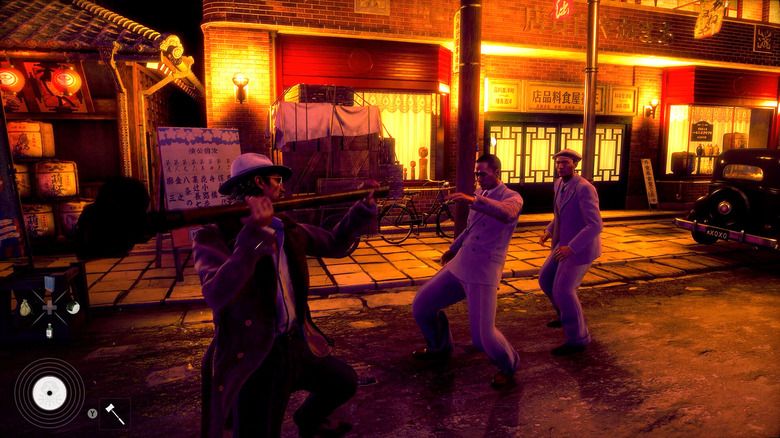
Stranger Than Heaven really leans into the classic Like a Dragon action-brawler experience. Still, its most evident gameplay twist is its more dynamic, complex combat system. Instead of a beat-em-up approach, the combat favors a more measured, intricate system that gives players precise control over Daito's individual arms in action. On the controller, the left shoulder buttons control Daito's light and heavy left-handed strikes, and the right shoulder button controls his light and heavy right-handed strikes. Its style is similar to games like Elden Ring and other souls-style games, but far more involved in execution, which makes for a big shift in pacing, from the deliberate combat of those games to the snappy action of others in the series.
It certainly took me some time to wrap my head around the timing and mechanical approach I needed to get into that flow. Stranger Than Heaven leans less toward an approachable action-brawler and more toward measured, skill-based combat that emphasizes brutal action. Admittedly, when I first played the game at Summer Game Fest 2026, I didn't feel the combat across its three demo stages, which were structured around a very sink-or-swim experience. However, the proper onboarding and updated gameplay based on SGF feedback offered a far better way to get into the combat.
I really came to enjoy the action, and it captures a more heightened sense of impact and brutality when compared to other games. The action captured the feeling of being a scrappy brawler putting everything you have into each punch, and knocking out enemies with pressured attacks and weapons made for some thrilling fights. However, I still struggled to embrace the nuances of the action, particularly getting used to directional-based blocking (alternating left and right blocks based on the angle of attacks), which is really difficult to handle during heated battles.
Stranger Than Heaven is far more serious than other entries, but it still features the oddball, bizarre encounters that made the series so well loved. In one instance, I walked down the wrong alley in the evening in Kokura and encountered a serial killer who was on the loose. While I tried to take him out, his devious knife skills and evasive style beat me multiple times. I eventually moved on and avoided him, but I want to try again in the full game.
This recent hands-on experience of Stranger Than Heaven really gave me a better sense of what the full game has in store, and I feel more invested in seeing where Makoto Daito's story leads. Much like the protagonist, the setting of Japan also changes, and seeing the cities evolve with culture and technology into something new made for one of the most captivating setting shifts I've seen in a Like a Dragon game yet. Stranger Than Heaven is a bold, daring spin on the Like a Dragon series, and with its more ruthless world to explore and fight through, I'm more compelled to uncover what's to come for Daito's story.
Stranger Than Heaven is set for release on January 17, 2027 for PC, PS5, and Xbox Series X|S.