

Oppo Find X10 Pro Max hands-on: Triple 200-megapixel cameras but few surprises
Trying to fill a OnePlus-shaped hole, Oppo plays it a little safe.
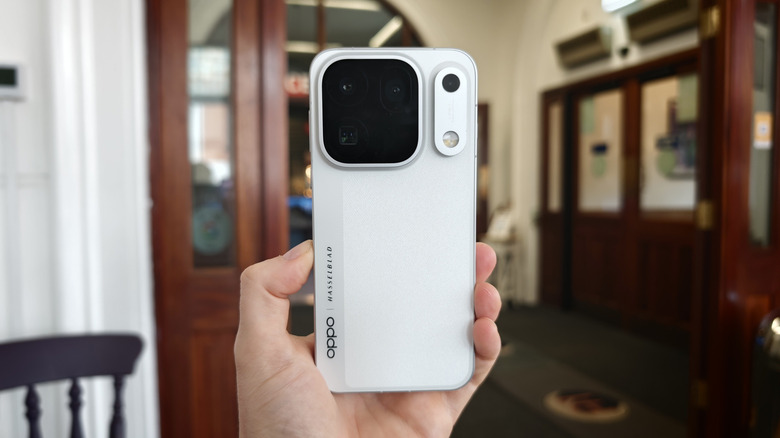
Oppo returns with another flagship phone with telephoto accessories and impressive specs. The Find X10 Pro Max is launching across Europe, Asia and other territories, supplanting last year's Find X9 Pro and sitting below the Find X9 Ultra. However, if you're based in the US, it will once again be hard to get the company's newest phone.
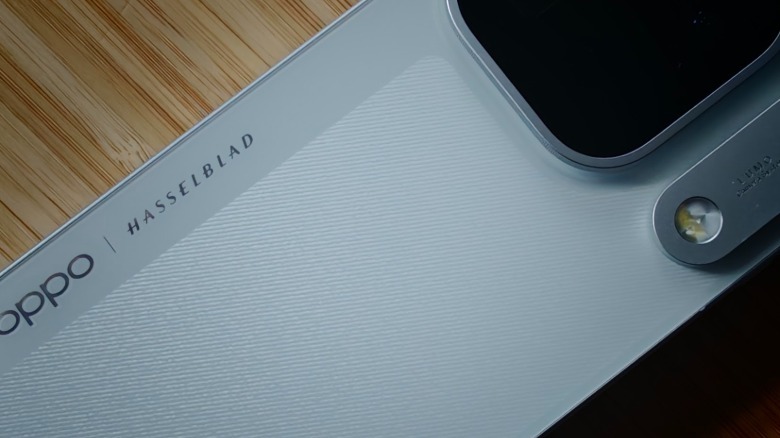
Oppo isn't breaking much new ground this year with its upper-midrange Find X10 series. Those changes include some minor design tweaks. Aside from a standalone color sensor and flash positioned next to the camera unit, it looks like another Find X series 'pro' phone. The company seems to have kept the Find X10 design separate from last year's Ultra and Find N6 foldable with its circular camera design. A slender orange accent outlines the camera array, the latest nod to Oppo's collaboration with Hasselblad.
 Mat Smith for Engadget
The materials and finish are further refined, with a matte-finish aluminum frame and a textured back panel that's actually quite smooth. (I thought it would be grippier!) The mid-flagship comes in Luna White (the phone I tested) and Titanium Grey, which has a smooth back cover that lacks the aforementioned textured panel.
The Find X10 Pro Max has a 6.78-inch display, roughly the same as the X9 Ultra, peaking at 3,600 nits. It's noticeably brighter than the Find X9 Pro. It also supports adaptive refresh rates from 1 to 144Hz, plus 10-bit color depth and Dolby Vision.
Oppo is keen to highlight the refinements it made to color temperature adjustments on the display, with faster changes in ambient light levels and a new "adaptive tone" option that uses a new five-channel sensor to better match the surrounding light. I couldn't particularly discern the difference in color changes. Still, auto-brightness seemed snappier when switching between dark rooms and bright outdoor daylight, which is crucial when trying to grab quick shots of a drone I was also testing at the time.
 Mat Smith for Engadget
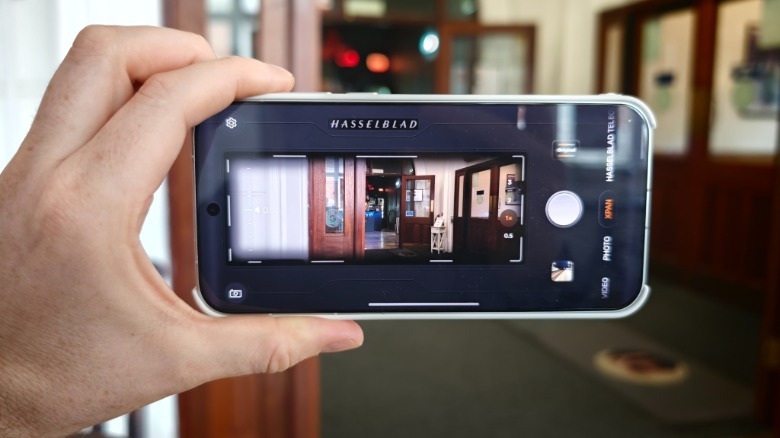
Cameras are still Oppo's smartphone obsession, though it gets a little confusing this time around. Its newest smartphone's cameras arguably aren't quite as potent as the company's flagship, the Find X9 Ultra, which launched only a few months ago.
That all comes down to the sensors. The Find X10 Pro Max comes with three (different) 200-megapixel sensors on the main, telephoto and ultrawide cameras. However, the Find X9 Ultra featured a significantly larger 1/1.12-inch main camera sensor from Sony. Meanwhile, the Find X10 Pro Max shifted to a 1/1.3-inch Samsung HPC sensor, making the X9 Ultra's main sensor roughly 25 percent larger. When I compared the phones' images, the X9 Ultra handled low light better, especially in Hasselblad Master mode, which strips away computational photography augmentations.
On that note, there's also a new "Lumo True" image engine for natural color, tones and textures, which minimizes aggressive AI processing, and that bears out. Compared with the X9 Pro and Ultra, the X10 Pro Max makes fewer computational guesses on text detail and patterning from excessive AI correction.
The Find X10 Pro Max's telephoto camera can reach 3x optical zoom, then crop into the massive 200MP sensor to extend that range to 6x lossless zoom. It doesn't approach the heady 10x zoom of the Find X9 Ultra, though. The Find X10 Pro Max is better equipped for macro photography, however, as it's capable of a 10cm focal distance on its 3x periscope telephoto lens.
More broadly, when pitted against the Find X9 Pro, I was pleasantly surprised to see that this year's X10 Pro Max autofocuses better in low light and captures more detail, regardless of the shooting mode I used.
 Mat Smith for Engadget
The Find X10 series' default setup will process full-res 200MP images into 26MP images across its entire zoom range, which is a nice touch and means less fussing around in the settings. Naturally, you can choose a high-res shooting mode if you want every single pixel.
There are plenty of features for video power users, too. Oppo claims its new DeepPix technology, which is built into Samsung's ISOCELL HPC sensor, delivers up to 17 stops of dynamic range, helping it capture in both bright and dimly lit environments. I didn't notice substantial dynamic range improvements in stills, but the technology is aimed more at video, preserving detail in high-contrast scenes.
The Find X10 Pro seems less prone to blown-out footage in bright light, but early testing suggests incremental improvement rather than a headline feature. If you're a vlogger or dedicated smartphone videographer, you'll appreciate the slight upgrade here, although many may not even notice it.
Those video pros have plenty of other modes to play with, too. The X10 Pro Max's Pro Video mode offers open-gate capture, using each sensor's full imaging area for wider coverage and giving editors more latitude to crop and reframe footage in post-production. It also supports Oppo's O-Log2 format, LUT previewing and support for Blackmagic's camera app. If you're going all-in, Oppo also teamed up with Tilta for a KHRONOS creator kit, with a phone cage, grip, cooling fan and flash.
 Mat Smith for Engadget
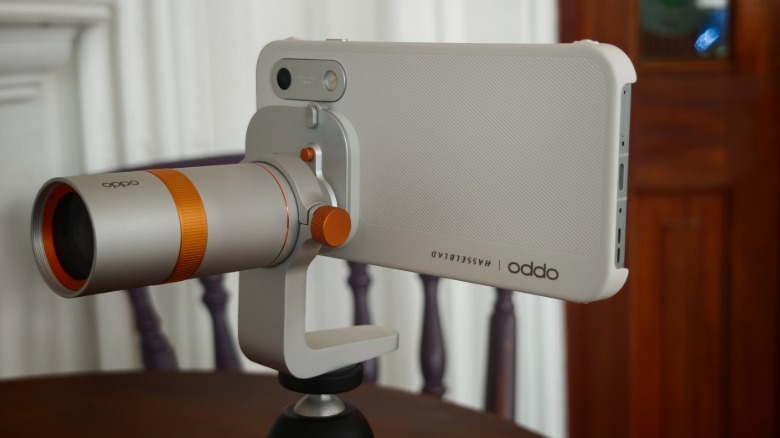
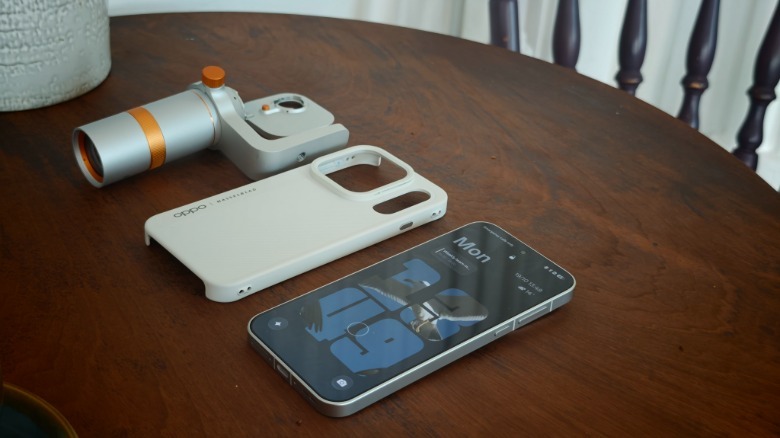
The teleconvertor system makes a return and feels less flimsy this time around. Composed of a specialized case, teleconvertor lens (which looks like a silencer for a pistol) and lens plate, it's a fun (optional) addition to the Find X10 Pro Max's camera offering.
The teleconvertor lens itself is the same as the Find X9 Pro's, but you will need a new adapter plate and case for the Find X10 Pro Max. With the Find X9 Pro, the telephoto lens plate that slides onto the felt a little too much like an early prototype. Over time, the black finish also scraped off after repeated removal, which had to be done often because the plate obscured the other camera sensors.
The new lens mounting plate sadly has the same issue: It covers those other 200MP sensors when you use the main sensor with the teleconvertor lens. To capture images without the telephoto lens, you'll have to remove the lens and plate to use the Find X10 Pro Max's other cameras. Oddly, its own Find X9 Ultra teleconvertor plate left holes for the other cameras, as do rival Vivo smartphones. The telephoto lens itself, co-developed with Hasselblad, feels premium and solid once again, and the new silver-and-orange design makes scratches less visible.
Oppo packed a 7,150mAh silicon carbon battery into its newest smartphone, another area where Chinese phone makers excel. The company says the Find X10 Pro Max can deliver almost 25 hours of YouTube streaming and record 4K video for nearly six hours. It supports fast charging at up to 80W and 50W wireless charging — but only on Oppo's proprietary AirVOOC wireless charger. It's powered by MediaTek's 2nm Dimensity 9600 Pro, which reportedly boasts a 61-percent improvement in multi-core power efficiency. Fortunately, MediaTek's reputation (and my personal experience) as sluggish and mediocre is largely in the past, especially with its recently released Dimensity chips.
However, these new chips miss out on the game optimizations that Qualcomm's Snapdragon chips get. In day-to-day use, it feels responsive, with apps and games loading fast. I've not experienced any notable hiccups or crashes.
 Mat Smith for Engadget
As I mentioned above, Oppo has no plans to launch the Find X10 Pro Max in the US. It goes on sale today and is priced at £1,499 in the UK, roughly $2,000. That makes it pricier than the Find X9 Ultra at launch. The company seems aware that it's pretty high – £400 more than the Find X9 Pro. It's sweetening the deal with a choice of free accessory: either the teleconverter kit, a free smartwatch (the Watch X3) or a tablet (Pad 5).
Early shoppers will get an additional £100 discount if you buy the Find X10 Pro Max before 28 October and an extra discount (up to £250) if you trade in an Oppo or OnePlus phone. If you can claim all of those, it softens the blow of that price tag, but it may disappoint devoted OnePlus owners, used to phones hitting the $1,000 mark or lower.
The Find X10 Pro Max's challenge is standing out when the similarly priced, older Find X9 Ultra has, in some ways, a more capable camera. That's particularly crucial when imaging is the device's standout feature. However, while dedicated smartphone videographers may be sold on the improved dynamic range, accessories and pro tools, it may be wiser to wait for Oppo's "ultra" version of the Find X10.