

Apple iPhone Duo vs. Motorola Razr Ultra: How do these foldables compare?
Not all foldables are created equal.
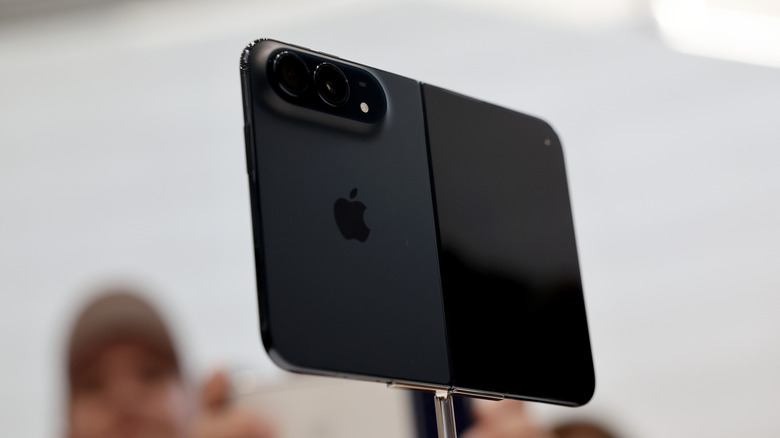
It's no secret that Apple is late to the foldable phone party, but that's really its style, contrary to some myths. While it helped pioneer categories with the iPod, iPhone, iPad and Apple Watch, more often than not Apple tends to sit on the sidelines, waiting for rivals like Samsung to take the big risks with new technologies. Then it swoops in, hopefully with a more polished product. The iPhone Duo is a prime example.
The foldable market is old enough at this point that Motorola has produced several generations of updated Razrs, its flagship being the 2026 Razr Ultra. At $500 less than the $2,000 iPhone Duo, there's obvious appeal, all the more so because you're not locked into the Apple ecosystem. Some of us are certainly OK with that predicament. In the Android world, though, you're not counting on one brand to get its hardware right every year.
If you're neutral on your platform pick for a future foldable, you should at least briefly pit the Ultra and Duo against each other. Given some dramatic differences, however, you're liable to end up firmly on one side of the fence. The two products are targeting very different demographics.
A battle of... passports and candybars?
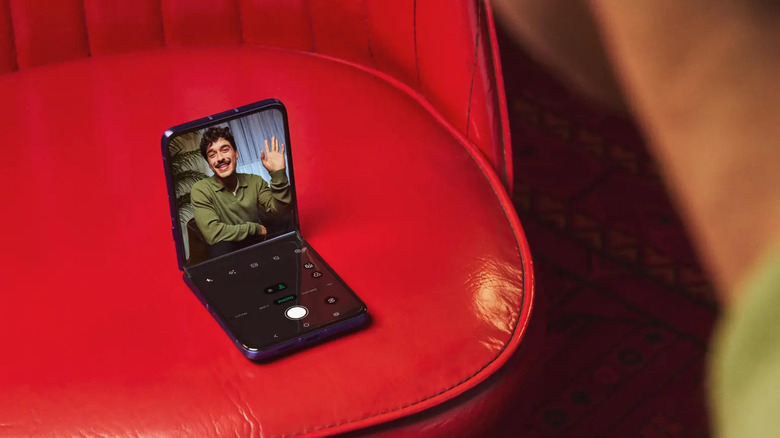
The deepest split is in form factors. While both devices offer internal and external screens, with adaptable interfaces based on how they're folded, the Ultra assumes a standard candybar layout when open, measuring 7 inches diagonally. The goal is to provide a maximally compact device that's easier to slip into your pocket or a handbag, even if it means sacrificing some functions on its external screen. The Duo, meanwhile, is shaped like a passport. It operates like a regular iPhone when closed, and it opens up to provide a matte, iPad-like 7.6-inch display. It can't literally run iPad apps, but this nevertheless expands the functionality of compatible iPhone software, in some cases enabling split-screen multitasking. If you're expecting to get more work done with a foldable, the Duo wins by default.
Performance
Performance-wise, the devices are closer than you might think. We haven't benchmarked the Duo yet, since it's not shipping until October 23, but the Ultra comes equipped with a fast Snapdragon 8 Elite processor and 16GB of RAM. The Duo will likely rank faster thanks to Apple's newer A20 Pro chip and usual iOS optimizations. For the vast majority of apps, however, there shouldn't be a huge difference.
Cameras
The devices are superficially comparable in terms of cameras, with each having two rear shooters — one wide, one ultra-wide — Apple's being rated at 48 megapixels, and Motorola's at 50. The devil is in the engineering, though. iPhone cameras are typically some of the highest-rated in the industry, so we won't be surprised if the Duo continues that trend and trounces the Ultra, which has known issues versus competitors like Google's Pixel series.
On the other hand, the Ultra's front camera also slots in at 50 megapixels, whereas the Duo's is capped at 12. The Duo does have an additional under-screen internal camera, yet that may actually be worse. Apple isn't even sharing its megapixel count and is selling it primarily as a tool for FaceTime video calls. Selfie addicts are going to want to unfold and flip the Duo to use those rear sensors.
Battery and durability
The Ultra's battery lasted 31 hours in our video-based testing, and Apple claims a comparable amount for the Duo when using the internal display. Both phones should last a full day in mixed usage, in other words. Regarding toughness, both use hardened ceramic glass to protect the exposed front display; however, the Duo has a superior IP68 rating for dust and water resistance, versus the Ultra's IP48. To translate, they can both be submerged in fresh water for a short time — it's just that the Ultra is potentially vulnerable to dust particles under a millimeter. You'll probably be fine if you don't take your phone into the Sahara.
Pick your platform poison

Spec-wise, the two devices are close enough that your decision will probably boil down to three factors: price, software and use case. The Ultra's $1,500 is already too much for a lot of smartphone shoppers, never mind $2,000. You can actually spend up to $3,200 if you want to max out the Duo's storage. In theory, the Duo can replace both an iPhone and an iPad mini, so its sticker shock might have a little less sting.
If you inherently prefer iOS or Android, there's no compelling reason to switch here. The iPhone 18 Pro is available if you want a cheaper (non-folding) candybar phone, and Android fans are spoiled for book-style foldables, such as Motorola's own Razr Fold. It's probably wiser to look at that one first, particularly since $1,900 is still cheaper than $2,000. Let's not forget the Google Pixel 11 Pro Fold and Samsung Galaxy Z Fold 8, either. The latter shares the same passport design as the Duo.
It may be worth taking a step back and questioning your reasons for getting a foldable. If you've got so little bag or pocket space that the Ultra is appealing, it might be wiser (and cheaper) to rethink your clothing and accessories. If you genuinely care about productivity, you can probably get more done by pairing an iPhone 18 Pro with a MacBook Neo, and actually save a little cash versus a Duo.