

Are there any disadvantages to using IMAX theaters?
Ticket availability and how much they cost can be important factors.
For a cinematic experience that is truly larger than life, you won't find many theater formats that rival IMAX. IMAX movies are among the biggest and loudest you'll ever watch. The entire experience is meant to be premium, a step above what you'll find in a typical screening. Few movies are truly made for IMAX, with Christopher Nolan's The Odyssey one of the most recent blockbuster standouts.
There are disadvantages to IMAX theaters, though. You can expect an IMAX ticket to cost more – if you can get one. The biggest showings are hard to book, if you're close to one anyway, with titles like The Odyssey only playing in IMAX 70mm at just 41 locations worldwide when it came to screens in July 2026. The format isn't automatically the best choice for a movie, either.
A bigger picture isn't always a better one
People go to IMAX movie theaters to enjoy big-screen pictures. IMAX releases feature an expanded aspect ratio compared to standard cinematic movies. Instead of the 2.39:1 widescreen ratio commonly used for blockbusters, IMAX movies can use 1.90:1 or 1.43:1 aspect ratios. The black space above and below a movie that you'll typically see is completely removed with an IMAX screening, with more of the movie filling your field of view.
Productions require specialist equipment to film it. IMAX films use either traditional 65mm IMAX film cameras, which are typically very loud, bulky and incredibly expensive. Movies which are "Filmed for IMAX" — like Tom Cruise's Mission Impossible: The Final Reckoning — use digital IMAX cameras to capture expanded footage, although they aren't shooting on the same large-format film stock. Either way, the effect is much the same: large landscapes end up feeling much bigger, and the action taking place across the entire screen seems much more immersive.
That wouldn't necessarily be a disadvantage for the watcher. You're probably not rushing to complain that a movie is too immersive. The problem is that a bigger frame can show you more without actually showing you anything better.
This is especially true for movies that haven't been made specifically for IMAX. Recent releases like Toy Story 5 and Moana have both screened in IMAX theaters without being classed by IMAX as "Filmed for IMAX." You're getting an IMAX screening, but if the movie wasn't shot with IMAX cameras or created with its aspect ratio, it won't be the same. Sure, it'll be bigger and louder, but you won't necessarily get the expanded aspect ratio and extra picture area that you'd expect from a movie made with IMAX in mind.
That can take away one of the strongest reasons to pay the premium. If I'm spending more on an IMAX ticket, I'll want to watch a film that actually makes use of the format in its truest format, rather than one that's simply been remastered to fit the screen.
You'll pay more for IMAX
Speaking of costs, buying an IMAX ticket will set you back more. IMAX is a premium format, and the cinemas that offer IMAX screenings are pricing it accordingly. Big chains including AMC and Regal explicitly apply surcharges for IMAX and other premium large-format screenings on top of their usual prices. How much you'll pay will vary, depending on the theater, location and screening but if you choose an IMAX viewing, you will almost certainly pay more.
That's easier to swallow if it's a movie specifically designed to take advantage of the grandeur of IMAX. Take The Odyssey, this year's darling of the IMAX world and the first Hollywood movie to be shot entirely on IMAX film. This is a movie that deserves to be seen on the biggest screen. The immersive scale of its production means that watching it in IMAX is part of the experience, rather than just an upgrade. You're not simply paying more to watch the same movie on a bigger screen.
I'm not entirely convinced that watching a showing of Minions and Monsters is quite the same. That's not a criticism of that particular movie: it applies just as much to Moana, Scream 7 or Masters of the Universe, all recent releases that also had IMAX screenings. These are just films that haven't been made with IMAX in mind. Their scale just isn't able to match, and you won't get the same experience from it.
So, if you're expecting to pay more, you want the best. The Odyssey and films to follow it sit at the top, filmed with 70mm IMAX film. IMAX Digital movies like the latest Mission Impossible movie go next. Everything else, it's probably worth just paying less and watching it on a standard cinema screen and not in an IMAX theater.
You won't find many true IMAX screens around
If you're certain you want to go watch a movie at an IMAX theater, there's likely one nearby. According to IMAX, there's 1,876 screens available across 91 different countries, although that number includes screens you'll find in museums and science centers, for instance.
Sounds good? Well, if you wanted to watch The Odyssey at IMAX in its true 70mm IMAX film, you'd have far less choice. Only 41 locations worldwide provided screenings for watching it on traditional IMAX 70mm film. There are far more IMAX-labeled screens, but these typically rely on digital projection rather than the physical 70mm film, so you're not necessarily enjoying the same experience.
So, what are you getting? Your local IMAX might still give you a huge screen and upgraded sound, but it could be a digital setup rather than the enormous 1.43:1, 70mm presentation that the critics are raving about. I travelled to watch The Odyssey for that very reason. I'm not sure I would do so for movies that are simply remastered for an IMAX screen, however.
The best movies mean a fight for tickets
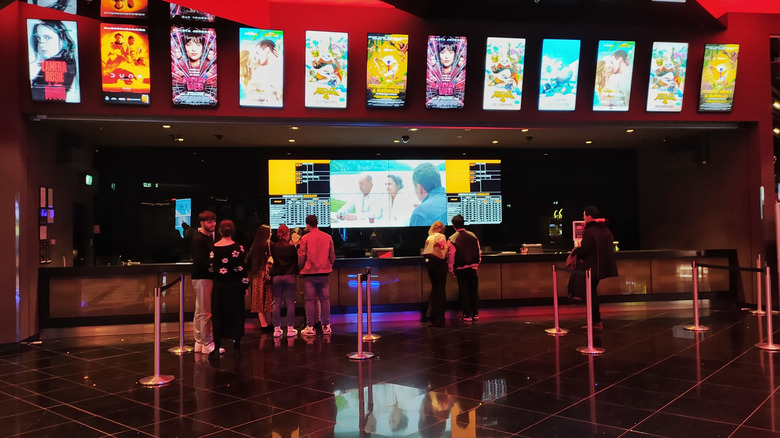
So, you're ready to go to an IMAX theater, but there's a potential problem. You're up against 10,000 other people trying to find a ticket for a less-than-adequate number of screenings. Finding a seat could be tough when booking the biggest blockbusters.
The Odyssey once again proves the point. Tickets for its first IMAX 70mm screenings were put on sale a full year before it was released. 95 percent of the first batch were sold within a day, with many selling within minutes. Once it was released, IMAX claimed that the 41 theaters showing it in 70mm film were recording sellouts well into its run.
A sellout run is great for the movie business. Less so for the cinema-goer who wants to watch it. Likewise, if the best seats are sold out, you're not getting the best experience. Where you sit in an IMAX theater can make a real difference: you don't want to be craning your neck from the second row or sitting right at the edge of an enormous screen. If the best seats are gone, I'd rather choose another showing than pay extra for a worse view.
Booking early can fix that, but who's choosing to book a trip to the cinema far in advance? Yes, IMAX theaters can be worth it for the biggest pictures, but there are too many disadvantages to overcome at the moment for smaller films. With pricing and availability, along with packed screenings to deal with, IMAX theaters have a barrier to entry that, in most cases, makes them more hassle than a standard screening. Whether that's worth it will really be up to you.