

SpaceX targets September 28 for Starship's first orbital flight
It will also be the first time the company is adding V3 satellites to the Starlink constellation.
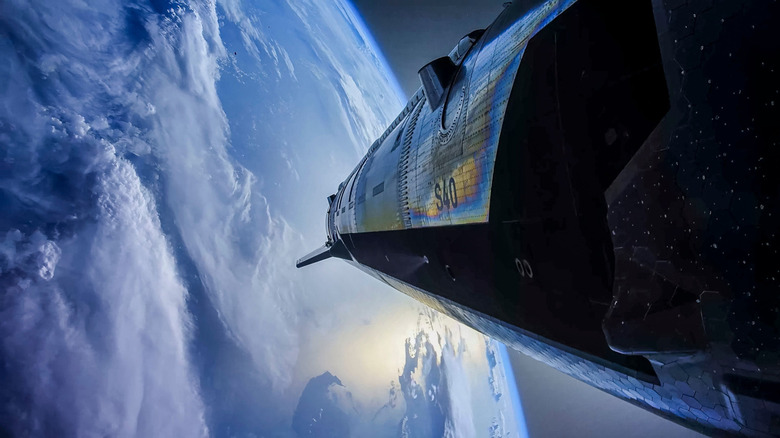
The next time SpaceX's Starship rocket launches, it will orbit our planet and add Starlink V3 satellites to the company's internet satellite constellation for the first time. SpaceX has now revealed that it's targeting September 28 for the rocket's 14th flight, with a 75-minute launch window opening at 8:15AM Eastern Time. The company was originally planning a September 22 launch, but it announced the new date without an explanation on X, where it also said that it's still pending regulatory approval.
Now targeting to launch Starship Flight 14 as early as Monday, September 28, pending regulatory approval https://t.co/3nG9wffG6A
— SpaceX (@SpaceX) September 17, 2026
Starship's previous flight tests have all been suborbital "to maximize public safety while allowing for maximum learning." SpaceX says this upcoming phase is the next step to prepare the vehicle for actual future flights and to ensure its reusability. During the test, Starship will fly 171 miles above our planet and will orbit Earth six times within the course of 10 hours.
The upper stage will also insert 26 Starlink V3 satellites into SpaceX's constellation. In Starship's previous test, the vehicle carried the next-gen satellites for the first time, just to make sure it's capable of doing so. Those satellites only extended their solar arrays and antennas to communicate with the rest of the Starlink constellation before burning up in our atmosphere. The satellites this flight will ferry to space will actually serve customers. Starlink V3 satellites can support 1 Tbps of downlink, 10 times more than what the V2 satellites are capable of, and 160 Gbps of uplink, representing an increase 22 times that of V2.
SpaceX won't be catching anything with the launch tower's arms this flight. Starship's Super Heavy booster will splash down into the Gulf of Mexico (renamed the Gulf of America in 2025 by President Donald Trump) a few minutes into the launch. The upper stage orbiting our planet will crash into the Pacific Ocean near Chile after it accomplishes its goal. You'll be able to watch the launch on SpaceX's X account.