

Everything Apple announced at the foldable iPhone Duo launch
The company also revealed the iPhone 18 Pro lineup, along with new Apple Watches and AirPods.
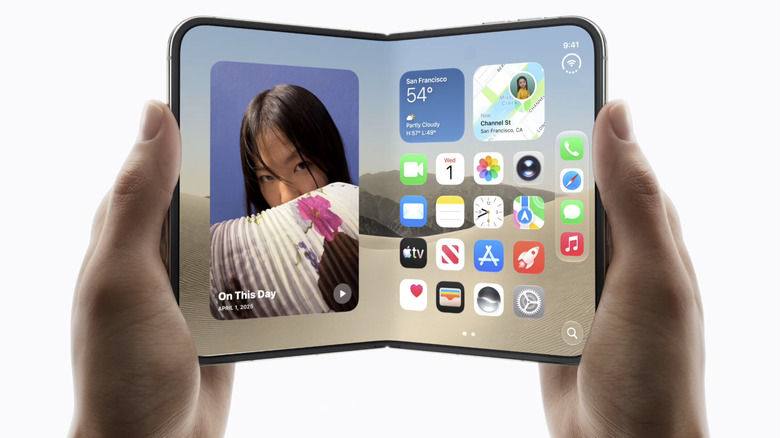
Apple executives — including newly minted CEO John Ternus — took center stage on Wednesday to unveil the company's latest iPhones and Apple Watches. The star of the show was the iPhone Duo, Apple's first foldable smartphone. The company also debuted the iPhone 18 Pro lineup. The base iPhone 18 may not arrive until the spring, when Apple is expected to reveal the iPhone Air 2 and iPhone 18e, in a shakeup of the usual iPhone release strategy.
In addition, Apple unveiled its latest wearables, the Apple Watch Series 13 and the Apple Watch Ultra 4. The company updated its AirPods as well.
Heading into the event, we knew that these iPhones and Apple Watches would debut alongside Siri AI, the revamped, Gemini-powered voice assistant that's at the heart of iOS 27, iPadOS 27, macOS 27, watchOS 27 and so on. Some earlier iPhones and Apple Watches — i.e. those compatible with Apple Intelligence — will support Siri AI as well, but Apple designed these latest devices in concert with the assistant. The public version of iOS 27 will bring Siri AI to compatible iPhones on September 14.
Siri AI will be available in English only at first. Support for French, Japanese, Korean, Portuguese and Spanish is coming in October. Note that Siri AI is delayed indefinitely in the EU. As with Apple Intelligence, it will not be available in China.
Meanwhile, Apple has increased the prices of older iPhones by $100. We'd usually see those drop when new models were announced. You can thank memory and storage supply issues for that.
Let's dive into everything Apple announced at its "Surprise and Shine" iPhone event.
iPhone Duo
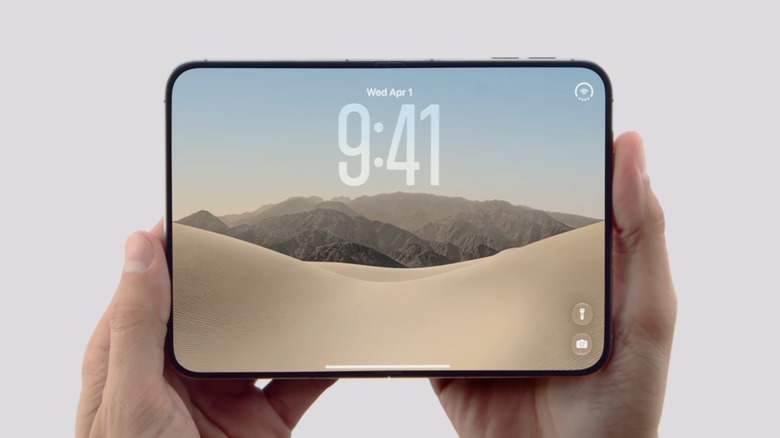
The main attraction of this event was the long-rumored foldable iPhone. It was hardly a secret that Apple was working on such a device, especially after third-party companies started selling cases for the phone earlier this week.
The foldable is called the iPhone Duo. It was previously expected that Apple would call it the iPhone Ultra. Duo isn't exactly the most exciting name, but at least it's a logical one.
The book-style format Apple has opted for allows for a wide main display that's akin to a tablet. Essentially, it's a way for you to have iPad mini-style utility right in your pocket. Both displays even have Apple Pencil support.
The main display features a 7.6-inch Super Retina screen, which is quite a bit smaller than the 8.3-inch one on the iPad mini. Still, it's the biggest-ever display on an iPhone. There's a 5.4-inch screen on the exterior. (I would love an iPhone with a screen that size without the foldable aspect. I still miss the iPhone 5.)
When it's open, the iPhone Duo is the thinnest iPhone to date at 0.21 inches (5.2 mm). Folded up, it's 0.44 inches (11.3mm) thick. It weighs 8.96 ounces (254 grams).
The main screen has something new for an iPhone, an under-display camera. As a notch hater, I'm very happy to hear that. The exterior display. on the other hand, has a hole punch cut out for the camera.
The speakers are positioned on the top and bottom of the device, which is available in two colors, star white and night sky. The iPhone Duo runs on the same A20 Pro chip as the iPhone 18 Pro models (more on that in a bit).
It's an eSIM-only device, which was a decision Apple made to make more space for the battery. The company says iPhone Duo offers 44 hours of video playback on the external screen. If you use both displays equally, you'll get around 24 hours of use before you have to charge, Apple claims. It adds that five minutes of wired charging is enough to give you five hours of video-watching time on the external screen.
Smartphones with foldable displays have been around for quite some time, but Apple tends not to enter a product category until it's confident that it can get things right. It's extremely unlikely that the company would have moved into foldables until it was sure it cracked the hinge durability puzzle. A report earlier this year suggested Apple ran into an engineering hitch that might have caused a delay, but that turned out not to be the case.
As it turns out, the iPhone Duo is IP68 rated for water and dust protection. Apple notes that the hinge has carbon fiber support plates and there's a titanium frame and hinge cover. There's a nano texture on the display that features a scratch-resistant coating too.
The iPhone Duo does not have a dedicated telephoto camera. There's a 48MP main camera and an 48MP ultrawide. The device has some nifty camera tricks. For instance, you might not need a tripod, as you can prop the iPhone Duo up by itself. There's also a way for you to let the subject see the framing of a shot while you're lining it up, and a cool FaceTime feature allows people on both sides of the device to join the conversation.
It does not seem like there's a dedicated camera control button. Nor is there an Action Button, which is a bummer. That thing's super useful for quickly Shazamming a song!
One other common iPhone feature you won't find in the first iPhone Duo is Face ID. Perhaps this is to get around the need to have a TrueDepth camera system for each screen, even though each has a FaceTime camera. Much like on iPads, Apple built the Touch ID sensor into the side button (aka the wake/sleep button). You can unlock the device using an Apple Watch as well.
On the software side, you'll be able to multitask on the main screen. As with foldables from other companies, you can run two apps at once on the main display or even two instances of the same one.
Apple has shifted essential controls (such as the Home Screen dock and playback buttons for Apple Music) to the side of the external screen to free up vertical space. All of the company's own apps are optimized for the dual-display device. Some third-party partners are making use of the format too. For example, you can browse clips from Netflix on the smaller screen before hopping into the relevant show or movie on the main display.
StandBy mode works on both displays. You'll see that on the external screen when you prop the device up, even if you're not charging — despite rumors to the contrary, iPhone Duo does support MagSafe and Qi2 charging.
The iPhone Duo starts at $1,999 for a version with 256GB of storage. There are 512GB, 1TB and 2TB options. The latter will run you $3,199. Pre-orders open on October 16 and Apple's first foldable iPhone will be in customers' hands as soon as October 23.
An official case (in navy blue or sand) will run you $79. A folio case with a kickstand costs $129 and that's available in navy blue and taupe.
iPhone 18 Pro and iPhone 18 Pro Max
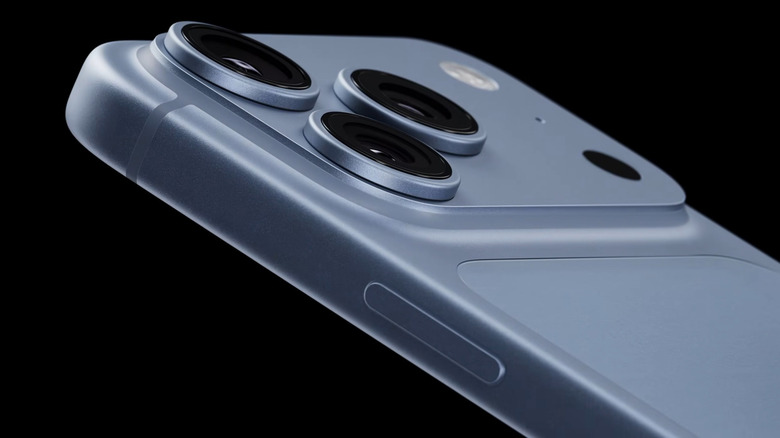
New Apple CEO John Ternus kicked off the presentation with a spiel about how the iPhone is "an intelligent personal hub," trying to position it at the center of your life (which it may well be already, let's be honest). He then transitioned into the first product announcements of the day, the iPhone 18 Pro and iPhone 18 Pro Max.
Apple says the 18 Pro Max has the longest battery life of any iPhone to date with 45 hours of video playback. The iPhone 18 Pro is said to have the same battery life as the 17 Pro Max, so it should be good for around 36 hours of video playback. Those figures are for eSIM-only variants, which have a larger battery than those with a physical SIM slot (those will have two hours less video playback time).
The company says it'll take just 15 minutes to recharge to 50 percent of battery capacity over a wired connection, and just five minutes of charging time will seemingly get you seven hours of video-watching time on the 18 Pro Max. We'll have to test those claims ourselves, of course.
The iPhone 18 Pro models run on an A20 Pro chipset. The A20 Pro is a 2nm chip that has a six-core CPU with four efficiency cores and two "desktop class" super cores that are said to be 20 percent faster than the previous gen. It also has a seven-core GPU and a neural engine with 32 cores. Apple claims the A20 Pro delivers up to 40 percent improved graphics performance, which could come in handy for the iOS-exclusive Monster Hunter game the company showed off. Apple added that the chipset offers 50 percent more memory bandwidth than A19 Pro.
The latest phones have Apple's N1 chip to support Wi-Fi 7, Bluetooth 6 and Thread. They also have a new modem, the C2. Apple says this "delivers meaningfully faster uploads when compared to C1X while consuming 15 percent less energy." it supports mmWave in the US as well.
To help keep things cool while it's processing all of your Siri AI prompts and whatnot, the iPhone 18 Pro has a next-gen vapor chamber with three times the surface area of the one in the iPhone 17 Pro. Apple says it has 80 percent recycled stainless steel and graphite and offers a 40 percent performance improvement over the previous cooling system.
The iPhone 18 Pro has a new 48MP fusion main camera with a variable aperture. The camera system supports 4K and Dolby Vision HDR for timelapse recordings and you'll be able to apply cinematic effects after you capture footage. Pro controls will let you customize the camera experience too.
To help verify the authenticity of photos, Apple is introducing a feature called Apple Reference Image (which won't be available in the EU or China, unfortunately). This is built into a sensor in the iPhone 18 Pro's main camera. The company is also supporting the SynthID watermarking standard for images that are modified or generated using AI.
In addition, the Dynamic Island on the iPhone 18 Pro models is smaller than on previous devices. It can display three live activities simultaneously.
As expected, the iPhone 18 Pro devices are more expensive than their predecessors, due in large part to increases in memory and storage costs. Each costs $100 more than the respective iPhone 17 Pro device. The iPhone 18 Pro starts at $1,199 and the 18 Pro Max starts at $1,299. Pre-orders open this Saturday (September 12) and the phones will be available on September 18. There's a hot new burgundy color option to go with the black, silver and glacier variants.
Along with the US, eSIM-only versions of iPhone 18 Pro and iPhone 18 Pro Max will be available in Bahrain, Canada, Guam, Japan, Kuwait, Mexico, Oman, Qatar, Saudi Arabia, the UAE and the US Virgin Islands.
We've had some hands-on time with the iPhone 18 Pro, so be sure to check out our initial impressions.
Apple Watch Series 12
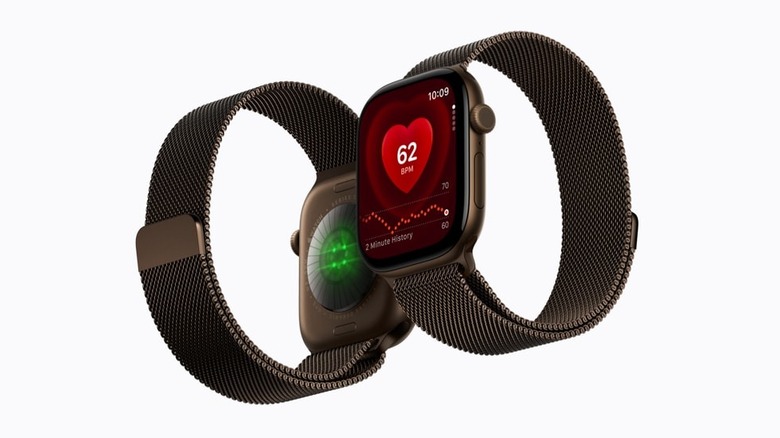
Along with the new phones, Apple refreshed its smartwatches. The Apple Watch Series 12 has upgraded internals. Among other things, Apple says these improve the wearable's heart rate sensing capabilities. It can check your heart rate every five seconds, allowing Apple to offer a new complication with more detailed live data. The device will offer users a Readiness score too.
The claimed battery life is the same as the Apple Watch Series 11 at 24 hours, but charging is said to be faster. Apple says 15 minutes of charging will get you 12 hours of juice. The Apple Watch Series 12 runs on an S11 chip.
The biggest new capability Apple is touting this time around is called Audio Intelligence. This can pick up sounds in the environment and alert you to noises like alarms and a crying infant, potentially making it very valuable for folks with hearing impairments. The feature can also transcribe the last 15 seconds of a conversation. Siri can summarize your chat too. In addition, Shazam can constantly run in the background to help you identify whatever song is playing nearby.
Apple says it won't store recordings and the audio remains private. All of the Audio Intelligence features are optional.
The Apple Watch Series 12 starts at $399. It's available in 42mm and 46mm case sizes in a variety of designs, including a returning ceramic option. Pre-orders open today and the wearable will be available on September 18.
Apple Watch Ultra 4
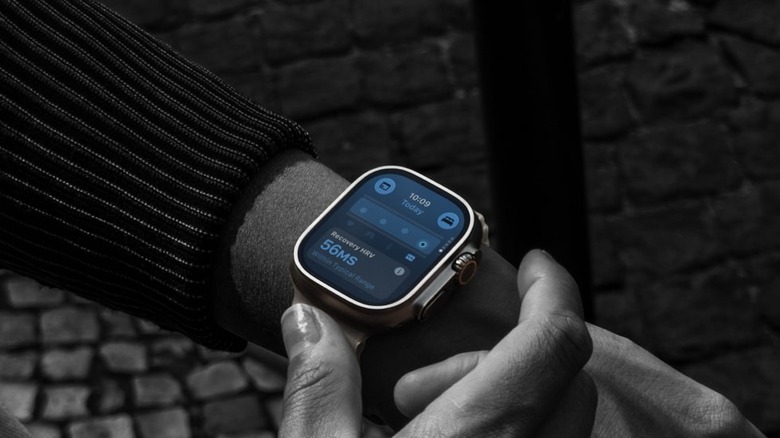
As for the Apple Watch Ultra 4, you can expect battery life improvements. Apple says it runs for up to 50 hours in everyday use and 84 hours in low power mode. A 15-minute charge adds as much as 18 hours of battery life, according to Apple.
The Apple Watch Ultra 4 runs on the same S11 chip as the Apple Watch Series 12. It supports Audio Intelligence as well.
Both watch lineups include a fancy Hermès variant. Along with a watch face that offers an "illustration of the ocean's depths," the Apple Watch Hermès Ultra 4 includes a "Grand H titanium band featuring a built-in extension mechanism to conveniently adjust the band to fit over a wet suit."
The Apple Watch Ultra 4 starts at $799. Pre-orders open in more than 50 regions and countries today, and the latest model can be on your wrist as soon as September 18.
AirPods 5
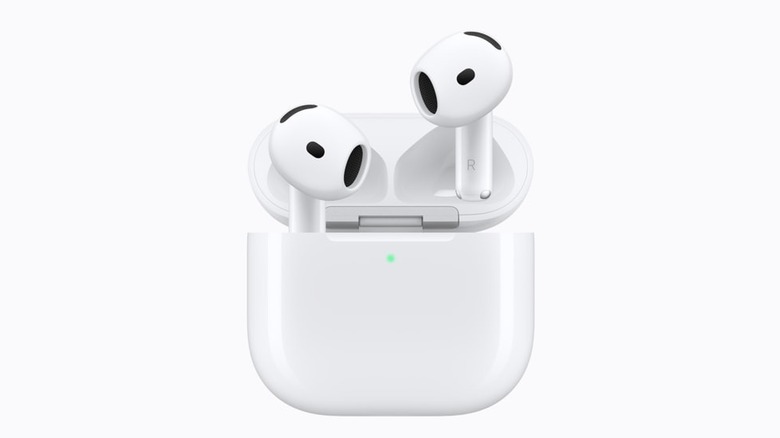
The AirPods 5 come in two flavors. A $129 entry-level model features open-ear active noise cancellation (ANC), with Apple claiming it "removes up to 50 percent more external noise compared to AirPods 4." The company says there's a "more natural Transparency mode," as well as improved IP57 dust, sweat and water resistance compared with the previous gen.
You'll get up to four hours of listening time with ANC enabled, Apple says. With the charging case, you'll seemingly get up to 20 hours of battery life.
A $149 option includes all of that as well as a wireless charging case (which you can top up with an Apple Watch charger) and on-stem volume control. Apple says this version will run for up to five hours with ANC enabled. The charging case extends the total listening time to 22 hours, the company claims.
You can pre-order both AirPods 5 options today. They'll hit stores on September 18.
What Apple didn't announce
There are several products Apple is said to be working on that didn't make an appearance at the "Surprise and Shine" event. The company doesn't tend to reveal new iPads at its iPhone events, as it usually saves those until later in the fall. Reports suggest an iPad mini with an OLED display is in the works and we may still see that within the coming weeks. After the recent Mac mini and Mac Studio refreshes, you'll need to wait a bit longer for new Macs as well.
We've seen some leaks around the next AirPods Pro, which could have cameras. Rather than surreptitiously capturing video, these are said to take still images that Apple feeds into Visual Intelligence. That could make for some very useful accessibility features. A user with vision impairment wouldn't necessarily have to rely on much-maligned smart glasses with built-in cameras or point their smartphone's camera at something they need more information about.
Apple's long-expected smart home hub display was nowhere to be seen either. In truth, it makes sense for the company to keep the focus on iPhone and Apple Watch and reveal other products later. I wouldn't be surprised to see Apple running a smart home-focused event in the coming months to show off the smart display along with revamped Apple TV and HomePod models.