

Can you use a satellite dish as a free TV antenna? It depends where you live
That old dish on your roof may not be totally useless.
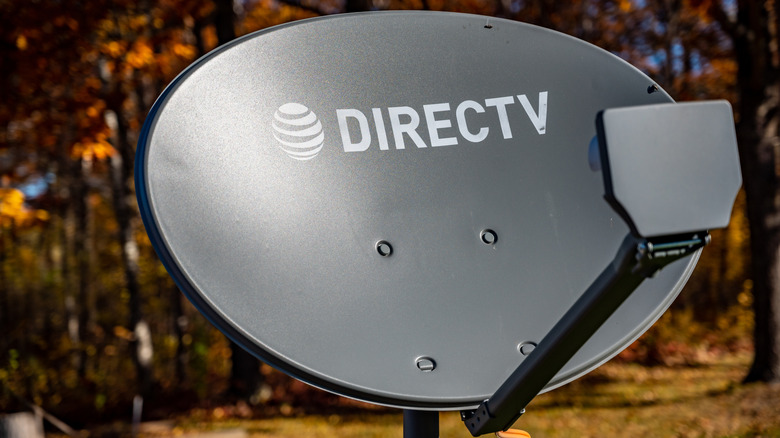
An old DirecTV or Dish satellite dish mounted on your roof definitely looks like something that should be able to receive free TV. Unfortunately, plugging its coax cable into your television isn't going to unlock your local ABC, CBS or NBC affiliate
Well, at least not for most Americans. A satellite dish is used to receive signals from space, and an over-the-air (OTA) TV antenna receives signals from towers that are much closer to home. They may both reside on the roof and use coax cable, but that's where the family resemblance ends.
It gets a little more interesting outside the US. In countries like the UK, free-to-air satellite TV is nothing new, so that dusty dish bolted to a house might still have some life in it.
Why your old satellite dish won't receive local television
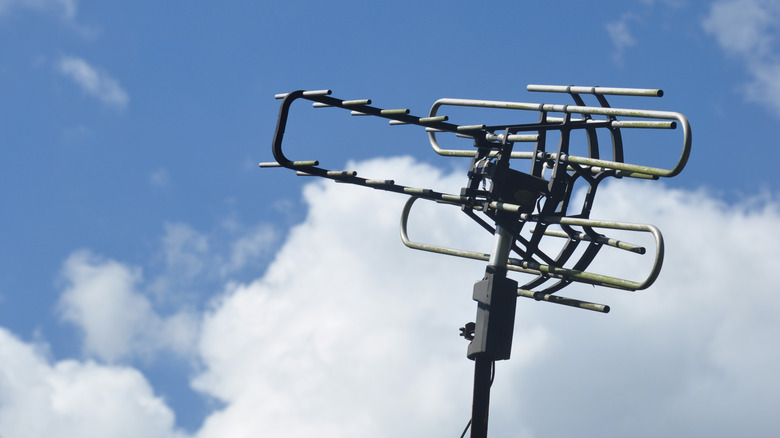
A satellite dish has a curved reflector that focuses incoming signals onto the low-noise block downconverter (LNB) at the end of the arm, and terrestrial antennas are designed to receive the much lower-frequency VHF and UHF signals used by local TV stations. Even attaching a conventional antenna to the dish isn't some clever trick, because the reflector focuses the signals in a way that doesn't meaningfully improve reception for an antenna designed for terrestrial broadcasts. Consumer tech DIY site Solid Signal's advice is much less thrilling: Use an antenna designed for the task.
But that doesn't mean that the whole installation has to be only a roof decoration. The pole or mounting point may be able to accommodate an outdoor TV antenna if it provides a suitable position relative to the local broadcast towers, and the existing coaxial cable may eliminate the need to run a new cable through the house. Satellite-specific splitters, diplexers or other hardware in that cable run may also need to be removed.
Reception is still very location-dependent. Terrain, nearby buildings, trees and antenna height can all impact digital TV reception, and outdoor antennas generally get better reception. Some viewers also require an antenna that can pick up both VHF and UHF channels.
A smart TV doesn't fix this either. If it has a built-in tuner, it can decode OTA television, but an antenna must provide it with a signal to decode.
Free satellite TV is more common outside the US
Cross the Atlantic and the seemingly outdated dish suddenly doesn't seem so outdated.
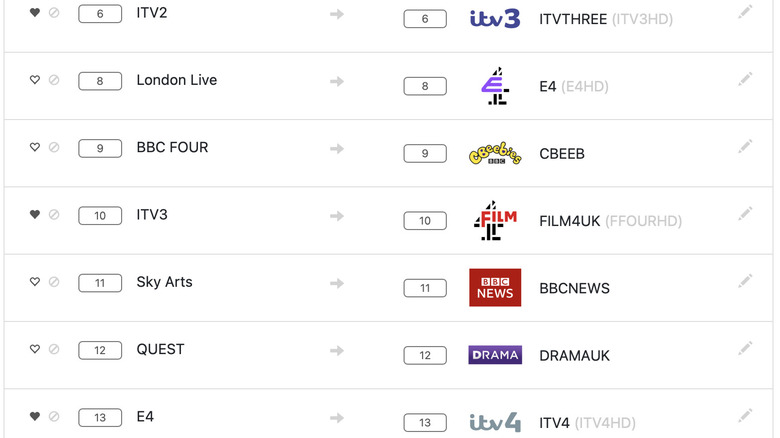
Freesat is the UK's subscription-free satellite television and radio service, offering over 100 channels. They can be received by a Freesat-enabled television without the need for a separate set-top box, but the television must have a working dish attached to it (smart apparently doesn't mean psychic). Many existing installations can be reused, including Sky Q and Sky+, but the LNB (signal receiver) attached to the dish may affect features like simultaneous recording. Freesat doesn't state that all old satellite installations will be compatible.
The US isn't a free-satellite desert either. Lyngsat's Galaxy 19 at 97.0°W carries free-to-air programming, primarily for multicultural and faith-based viewers throughout North America, and current listings still show clear channels on the satellite. Those channels are not a free cord-cutting jackpot, as you need the proper dish, LNB and receiver to receive them.
For the majority of Americans who just want to watch free mainstream TV, an OTA antenna is still the simpler path to local TV. Some gaps can be filled by internet services as well, as free streaming services carry local news and other live channels (depending on the market).