

NHTSA calls out autonomous cars for interfering with first responders
The agency is giving autonomous vehicle makers until the end of July to figure out a solution.
The US Department of Transportation's National Highway Traffic Safety Administration (NHTSA) is demanding action from autonomous car makers after identifying "a clear pattern of driverless AVs interfering with law enforcement and other first responders" over the past months. Jonathan Morrison, the agency's administrator, wrote a letter addressing the developers and issuing a call to action. Emergency situations are not rare or "edge cases," he wrote, so he wants AV developers and operators focus their resources on fixing the issue immediately.
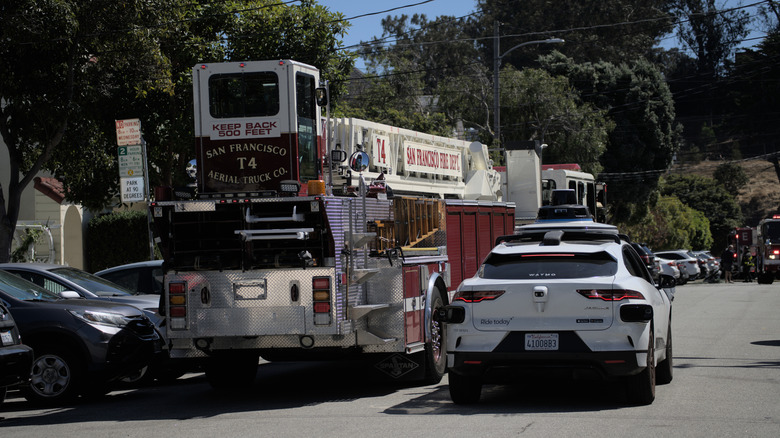
While the NHTSA didn't give specific examples, there have been news about self-driving vehicles getting in the way of ambulances and fire trucks, like in the image above, for years. After a deadly shooting at a bar in Austin, Texas in March, a Waymo vehicle blocked an ambulance that was responding to the incident. While an officer was able to manually drive the Waymo robotaxi out of the way, it cost them a few minutes to resolve the problem.
According to Wired, emergency first responder leaders told regulators during a meeting in March that they were becoming frustrated at the behavior of autonomous vehicles on the streets. They said they've had to spend time during emergencies resolving problems with frozen or stuck cars. Officials from San Francisco and Austin, where Waymo's robotaxi service has been in operation for a while now, said the company's vehicles have been getting worse. They've apparently been seeing "backsliding" in the AVs' performance, with the vehicles now committing more traffic violations.
San Francisco Fire Department chief Patrick Rabbitt, reportedly said that Waymo vehicles have recently been freezing and blocking the department's fire stations and trucks. Austin officials echoed what Rabbitt said. Waymo vehicles have also been "freezing up" in the city and have been failing to recognize first responders' hand signals. Dealing with the company's robotaxis are costing them precious time and preventing them from responding to emergencies in a timely manner.
"Every second matters when law enforcement officers, firefighters, or paramedics are answering a call because lives are on the line. That is why human drivers who impede these operations are subject to fines and even jail time," Morrison wrote in his letter. "So, when an AV disrupts first responders or impedes an emergency vehicle, it ceases to be a minor software anomaly. The technology driving alongside them must support their efforts and get out of the way, not disrupt their life saving mission or compound the dangers they face."
Morrison said the NHTSA will schedule meetings with autonomous vehicle makers by the end of July to hear their solutions, giving them less than a month to conjure up a response to the agency's call to action.