

Meta Glasses hands-on: Ray-Ban is out, Kylie Jenner is in
Familiar styles that offer more adaptability for slightly less money than the Ray-Ban models.
After years of releasing smart glasses that bore the Ray-Ban or Oakley brand, Meta has finally made its own (although still in collaboration with EssilorLuxottica). The company today unveiled a trio of AI Glasses — the Fury, the Adventurer and the Meta Glasses by Kylie (labeled in some places as "Starfire"), and the first two of those styles start at $299. The variant that was co-designed with celebrity Kylie Jenner will cost $399.
At its launch event in New York City yesterday, Meta set us up with a pair of the new glasses and a companion phone, and let us roam around the venue and its demo areas somewhat freely. The company also had multiple units of the other styles around for us to pick up and try on as we liked, so I got a good sense of all the different options available.
What's new
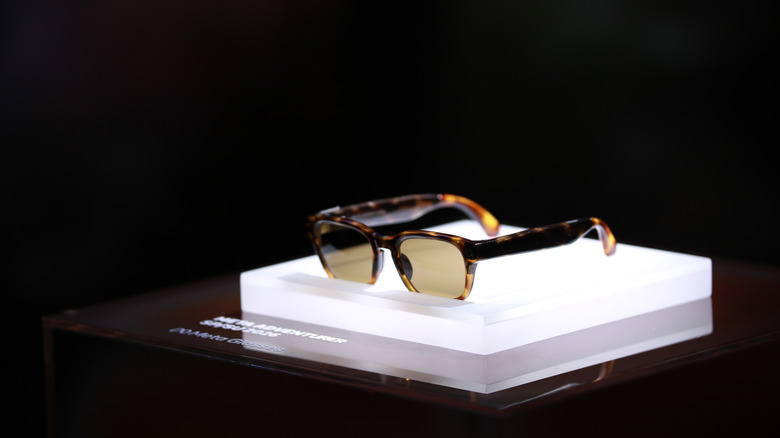
But first, the basics. The new line of Meta glasses, according to the company's VP of wearable devices Ming Hua, is "introduced by Meta and EssorLuxottica," and were built on "the same hardware platform as our best-selling AI glasses." You'll find a similar multi-array microphone setup, spatial audio and 3K video cameras. But the company has "really expanded the style, the colorways and materials" with a total of 26 combinations available. Of the three styles, the Meta Adventurer was described as more "classic" and rectangular, while the Meta Fury is a bit more full, square and comes in more color options.
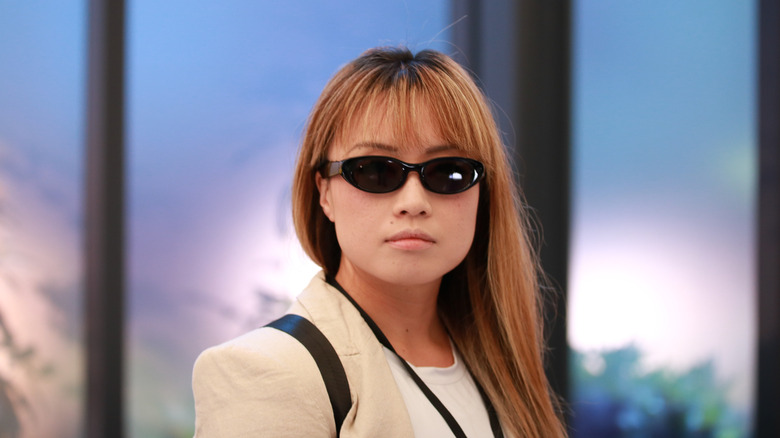
The Starfire, which looks a lot like the smaller oval frames that Jenner favors, comes in black or tortoiseshell, and features a gem on the lens (more on that later). Across the whole lineup, the new Meta Glasses feature a three-way adjustable nose pad to better fit more face shapes. Like the Ray-Ban Meta, they also have over-extension hinges and user-adjustable temple tips for those who like their glasses to really hug their skulls.
Alongside the new hardware, Meta is also updating the software for its glasses. The Meta AI companion app will launch with the Muse Spark AI update that rolled out to the company's existing glasses earlier this year, which should help it give better answers to questions. The company is also adding 14 languages to its library of supported languages for live translation, including Mandarin, Korean, Japanese, Arabic and Hindi. That brings the total number to 20.
Other software rollouts include a new "dynamic photos" feature that takes several photos in succession when you shoot and can pick the best image for you. Meta is also bringing the "pedestrian navigation" feature from its Display glasses to the new lineup so you can hear guidance like "Turn right now" when you're walking around a foreign city, for instance.
Hands-on with the Meta Glasses by Kylie

I spent most of my time with a pair of the Jenner style in black, which are quite reminiscent of cat eye glasses by Gentle Monster, Prada and Chanel. I was frankly shocked that the shape of the frames seemed to suit my face, and I certainly felt as if I was emulating Jenner's vibe.
There are a few features unique to this version of the glasses, which cost $100 more than the other two styles. First, and most noticeable, is the small gem affixed to the top right corner of the right lens, close to where the camera is. It's a small nod to how Jenner gets hounded by paparazzi, with the way it catches light seeming like flashes of cameras. It's also sparkly, which is part of the Kylie aesthetic, after all.
As for more functional differences, a physical one is that the adjustable nose bridge is made of metal, which makes it easier to wipe makeup off of. It's something that was considered during Meta's conversations with Jenner when they asked for her input on the glasses. As someone who was wearing foundation and powder when I tried these devices on, and who constantly sweats down her nose, I was very happy about this. The different material definitely seemed effective, as I noticed less makeup residue on the Starfire than on a demo Adventurer unit I tried on later.
I also really liked fiddling with the adjustable nose bridge on all the models, which were easy enough to click into place, but sturdy enough to hold their position while on my face. It was really through experimenting with the different angles that I finally realized the type of nose pad that best suits my face and keeps these glasses from slipping off.
Though it's not unique to the new Meta glasses, I was happy to see the adjustable temple tips and over-extension hinges. I'm not a wearer of spectacles myself, having gotten LASIK about 16 years ago, so I'm not very familiar with all the different challenges that plague modern specs wearers. But compared to my experience with early (and slightly more recent) models of video-recording glasses, the trio of new Meta glasses were satisfyingly comfortable to wear for hours at a time.
One other feature that sets the Starfire glasses apart from the Fury and Adventurer: You'll be able to select Jenner as the voice for your AI and all other spoken elements like the onboarding instructions or battery life readout. This wasn't working on the model I wore for the session, but I tried on another pair at a Starfire-specific demo area and can confirm that what sounded like an AI version of Jenner's voice was speaking to me. I was half expecting to hear some version of the "rise and shine" tune that Jenner was, shall we say, known to croon for a time. But I didn't.
There isn't much that's very different between the Meta Starfire and its non-Jenner counterparts. The little gem on the right lens is very subtle, and only once did I notice it from behind the lens. Admittedly, in that moment I did think it was a speck of dirt and try to flick it off, but once I remembered it was placed there deliberately it faded out of my consciousness again.
It's probably not worth taking too seriously, but I noticed that in about an hour of wear and use, the Starfire unit's battery life went from 96 percent to about 66 percent. But I would wait until we can test units that are ready for the real world before guessing at battery life, since there are myriad factors that could cause excessive power draw in this scenario.
Translation support for new languages
Like I mentioned earlier, Meta's translation feature now supports languages like Mandarin, Korean, Japanese and about 11 more (in addition to the original six). I had a quick conversation with Meta's product manager Emerson Qin about Sichuan food in New York City. He spoke Mandarin to me, the Meta glasses translated his speech into English into my ears and then I replied in English. My responses would appear on his screen in Mandarin, and as I'm bilingual, I was able to verify the accuracy of the conversation.
Aside from a few small stumbles that feel very typical of modern language translation systems, Meta's AI was able to capture the chat between Qin and I quite accurately. I was also able to get a preview of a new code-switching feature that allows people to use terms from other languages instead of having to make up or approximate names that don't exist in certain languages. In our chat, Qin said "East Village" in English before continuing his sentence in Mandarin, and the AI translated his whole sentence in English seamlessly to me.
Meta AI is familiar
I had to leave before our conversation made me too hungry, and of the new features coming to Meta's software, this was the only one I really checked out at the event. I haven't seen for myself the new dynamic photos, but from the demos that Meta showcased, it certainly seemed like the AI was capable of recognizing a lot of things and scenes.
Every time I asked it to tell me what I was looking at, it quickly and accurately described the launch event for Meta AI, calling out words and notable objects. When I requested a translation of a sign in Arabic, it told me what was written (an assortment of confections). At the suggestion of a nearby Meta exec, I asked the AI to play music inspired by the brightly colored, bakery-themed space. It decided to play "quiet ambient music" – you tell me how accurate that feels.
It's not perfect, of course. When I asked it to describe my outfit, though, it did keep misrecognizing the giant lens of my DSLR as a carrying case for glasses. Sometimes, I would have to reply to a real person asking me a question while the device was still reading out a response to me, and it would stop mid-sentence, only to carry on after a pause. It was a bit odd, but seemed reasonable in the chaotic environment. I do think it's nice we've reached a point where the glasses feel sleek and comfortable, and response time is thankfully short, but basically most of the features here aren't novel to the company or the industry.
Still, though there isn't much by way of meaningful new updates at the launch of Meta's new AI glasses, I think it's nice the company is attempting to cater to a wider audience with this series. Not only are these glasses more customizable and available in more styles, they're also about $100 to $200 cheaper than the current-generation Ray-Ban Meta glasses. Of course, you'll get basically all the same new features on those, and are paying a premium for the Ray-Ban brand. But I left the event mostly pleased with the adjustable nose bridge (which is easier to use than the replaceable nose bridges on the Ray-Ban pair) and slightly obsessed with the Starfire style.