Fujitsu posts
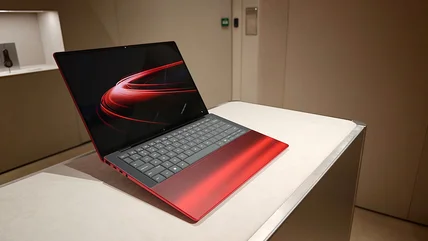
Tough luck, Fujitsu -- seems your entry into the entirely oversaturated netbook market is just "too little, too late." That's the conclusion drawn by critics over at Laptop, who found the M2010 to be a solid performer, but one with a cramped keyboard and a battery life of under two hours. No doubt, a longevity mark such as that has no place in a netbook, and the surprisingly high $449 price tag certainly didn't do it any favors. Reviewers pointed out that for $10 less, you could snap up the Samsung N110, which offers up four times the battery life and a more comfortable keyboard. Heck, the $379 Eee PC 1000HE goes for six hours strong and seems to be just as potent. Of course, this one's definitely doused in red, so if that's your shade, good luck thinking logically about this.
Fujitsu brings M2010 netbook to North America, packs in few surprises
You know the basic rundown by heart by now, and Fujitsu doesn't stray far from the 10-inch netbook script with its newish M2010 "mini-notebook." The big "killer" features on display here include standard Bluetooth, three USB ports, a 50 second Windows XP start up time and a digital microphone. The $450 pricetag includes a 3 cell battery rated at 2.5 hours of computing, and you can nab a 6 cell to double your pleasure for $129. Fujitsu is aiming this one at educational markets, and is touting some beefed up build quality for handling the wear and tear, but we're not sure there's anything here that justifies the pricetag or the totally average weight and thickness. The single configuration should be available now online and at select retailers.
NTT DoCoMo counters SoftBank with 18 new handsets of its own
8 megapixel cameras and 3-plus-inch wide VGA displays are the order of the day in NTT DoCoMo's 18-strong summer 2009 range of phones from Panasonic, LG, Fujitsu, NEC, Sharp, HTC, and Toshiba, but a few are definitely standing out for us. First would be the unforgettable N-09A from NEC, integrating patent leather right into the phone's case; it's not often that you need to condition your handset with saddle soap, so that one definitely caught our eye. Next up, we have a couple smartphones (not to say that anything in this lineup can be labeled "dumb" by any stretch) from HTC and Toshiba -- the expected HT-03A and T-01A, respectively, which are localized rebrands of the Magic and TG01. Only a Japanese carrier lineup oozes enough machismo to make a TG01 look like a 16-ounce can of weak juice, so our hats go off to you, NTT DoCoMo -- thanks for ruining one of 2009's most promising devices for us. Hey, at least they're offering the Magic in both white and black.
Fujitsu's supercomputer-ready Venus CPU said to be "world's fastest"
Due to the intrinsic limitations of machine translation, it's hard to say exactly what makes Fujitsu's latest supercomputer the "world's fastest," but we'll hesitantly believe for the time being. We're told that the SPARC64 VIIIfx (codename Venus) can churn through 128 billion calculations per second, which supposedly bests the current champ -- a chip from Intel -- by 2.5 times. An AP report on the matter states that Fujitsu shrunk the size of each central circuit, which in turn doubled the number of circuits per chip. 'Course, this beast won't be ready for supercomputer work for several years yet, giving the chip maker's biggest rivals plenty of time to sabotage its moment in the limelight.
[Via Physorg]
[Via Physorg]
Fujitsu and Macnica embed Android into digital photo frames -- WalMart, you listening?
Hey, if you can take Google's open source OS for mobile telephones and chunk it into a netbook, then why not digital photo frames? Fujitsu and Japan's Macnica have teamed up on what they're calling a "Software Platform for Home Network Digital Photo Frames" based on Google's Android. In other words, it's a software platform for home network digital photo frames based on Google's Android. Uh, riiight. The prototype frame above was on display in Japan yesterday running slideshows off a standard DLNA network. Honestly, we don't care what OS is running at the core of those cheap, off-brand digital photo frames cluttering big box shelves every holiday -- just make the navigation intuitive and we're happy. Android seems like a good (and free!) start along the road to standardization.
Fujitsu gets official with M2010 netbook, Engadget Chinese goes hands-on

We already caught sight of Fujitsu's new 10.1-inch LOOX M netbook in Japan earlier this month, and it looks like the company has now gotten official with the seemingly identical M2010 model for some other markets, although it still hasn't made it all the way over here. The netbook itself is about as standard as can be, and includes a 1.6GHz Atom processor, 1GB of RAM, a 160GB hard drive, and built-in Bluetooth, among other not at all surprising specs -- although you will apparently get a bundled DVD burner and wireless mouse with it, which makes the nearly $650 price tag at least a tad more reasonable. What's more, while they didn't get ton of time to spend with it, our pals at Engadget Chinese did manage to snap a few hands-on pics at the launch event, which you can check out by hitting up the link below.
[Via Engadget Chinese]
[Via Engadget Chinese]
Fujitsu's FMV LOOX U C50N bumped up to 2GHz Atom Z550 proc, won't look back
Fujitsu just stuffed Intel's latest Atom chip, the 2GHz Atom Z550, into the FMV LU C50N UMPC, the Japanese LOOX U version of its U2010 / U820 UMPC. Of course, the processor breaks through Microsoft's restrictions on XP for netbooks, so out of the box you'll have to take the performance hit of Vista, and then perhaps get in on some Windows 7 RC action to really feel the speed boost. Other specs include just about anything else you might imagine could or couldn't fit into this form factor -- including a 5.6-inch 1280 x 800 touchscreen.
[Via jkkmobile]
[Via jkkmobile]
CSIRO's patent lawsuits conclude with the final 13 companies settling
Looks like CSIRO's legal days are over -- for the moment, at least. Having already reached an agreement with HP, the Australian government-funded research firm announced this week that it's settled with the remaining 13 companies it sued for patent infringement, claiming it owned the rights to 802.11a/g. For those who haven't been keeping track at home, that includes Dell, Intel, Microsoft, Nintendo, Fujitsu, Toshiba, Netgear, Buffalo, D-Link, Belkin, SMC, Accton, and 3Com. The details of any of the settlements are undisclosed, but as iTnews reports, it's expected CSIRO ended up with some substantial monies now that the dust has settled. Chief Executive Dr. Megan Clark noted that it'll continue to "defend its intellectual property," so if you're a high profile tech company who creates WiFi-equipped gadgets and hasn't been served a lawsuit yet, we don't blame you for being a little nervous right now.Fujitsu unleashes upgrades to its FMV-Deskpower series

When not busy revolutionizing biometric door access, it turns out that Fujitsu dabbles in computers. Crazy, huh? Its come to our attention that the company has just dropped the bomb on upgrades to a generous portion of its product line, including Blu-ray drives, storage and RAM upgrades for its all-in-one F-Series; a Core 2 Duo, 4GB RAM and 1TB hard drive for its LX Series; and Core 2 Duos for the Deskpower CE series. If that weren't enough (and it's not) the company's EK Series' all-in-one machines got a refresh as well, sporting a 19-inch display, up to 500GB storage, and 4GB RAM. Sadly, the Deskpower CE machines still bear that same cringe-worthy look that's been upsetting those of us in the gadget community for years now, but maybe that's the kind of thing that turns you on? Hit the read link for the full breakdown and a red hot gallery.
Fujitsu's 10.1-inch LOOX M netbook looks good, positively average
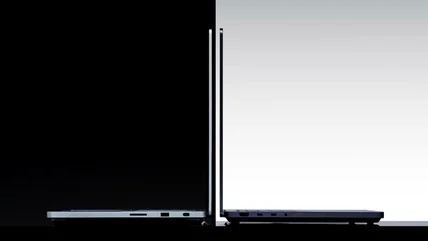
Not that Fujitsu's totally new to the netbook arena or anything, but we've got to hand it to the outfit's design team on this one. The newfangled LOOX M netbook is definitely handsome, even though the innards contain a list of hardware components that we could rattle off in our sleep. Ready? Here goes. A 1.6GHz Atom N270 CPU, 1GB of DDR2 RAM, a 160GB hard drive (yawning yet?), WiFi, Bluetooth 2.1+EDR, three USB 2.0 sockets and a multicard reader. If you're suddenly overcome with déjà vu, you're definitely not alone -- 'tis a shame Fujitsu has the nerve to charge ¥59,800 ($611) for something that's no more advanced than the original line of Eee PCs.
[Via Engadget Japanese]
[Via Engadget Japanese]
Fujitsu's secure USB tech keeps your data from wandering off (or just plain deletes it)

With corporate espionage on the rise, you just cannot be too careful, right? We've all heard the horror stories: Someone takes a spreadsheet home to do a little number crunching on his personal PC and, next thing you know, some ne'er-do-wells in Tehran have the specs for the President's personal helicopter. Well, the brain trust at Fujitsu Labs has put its collective heads together and come up with a pair of new technologies aimed at preventing sensitive information from getting into the wrong hands. First, the "secure USB memory device" is a thumb drive containing a processor and a battery. Data security policies can be set to delete data after a specific period of time or if the drive is accessed by an unauthorized computer -- handy if the thing gets lost or misplaced. Second, the company's "file redirect technology" restricts the data to the USB memory device itself, or to a specified server. The company is currently conducting internal trials of the technology, but we'll let you know as soon as we see one of these bad boys in the wild.
[Via Akihabara News]
[Via Akihabara News]
Fujitsu's PalmSecure takes high-speed, contact free biometric readings

This next item should be music to the ears of security professionals, fans of biometric devices, and germophobes alike. Fujitsu has just announced a new palm vein authentication device -- one that's being touted as the world's fastest, and the first that works without the user actually touching the device. Unlike past implementations of this technology, which moved at a comparative snail's pace, PalmSecure works in as little as one millisecond. We can think of a number of places where this sort of thing could be particularly useful, from top secret lairs housing doomsday devices to anyplace where people might not be washing their hands as often as they should be (we really hate that). Despite its speed, Fujitsu insists that this bad boy performs with the same level of accuracy as its slow moving brethren. More pics after the break.
[Via Akihabara News]
[Via Akihabara News]
Beta driver allows AMILO GraphicBooster to shed the external display

Fujitsu Siemens's AMILO GraphicBooster has already proven itself to be pretty capable when hooked up to an external monitor, but a new beta driver now looks set to make the add-on even more convenient, and let you use it with the Sa 3650 laptops' own display. Better still, that apparently doesn't come at much, if any, expense to performance, but any other details (including word of availability) are unfortunately a bit light at the moment. You can draw your own conclusions from the video after the break, however, although Fujitsu Siemens' inability to produce a video in the proper aspect ratio may not inspire all that much confidence.
[Thanks, Max_P]
[Thanks, Max_P]
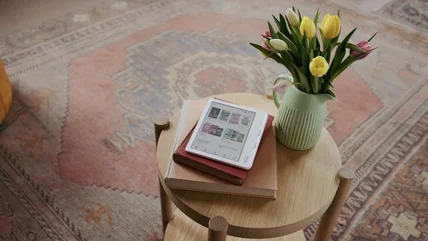
Fujitsu melts faces and wallets with FLEPia, the first color e-book for general consumption

Update: Now with snazzier press shots!
Gallery: Fujitsu FLEPia
[Via Engadget Japanese]
Read - English press release
Read - Videos of FLEPia in action
Fujitsu Siemens introduces "zero-watt" Esprimo 7935 PC

Calling it a "zero-watt" PC may be a bit of a stretch, but Fujitsu Siemens is nonetheless breaking a bit of new ground with its new Esprimo 7935 PC, which supposedly consumes no energy at all when it's powered off, as opposed to the one to four watts an average PC consumes unless it's actually unplugged. As you may recall, Fujitsu has already gotten in a bit of practice with its zero-watt monitor, although the PC takes things a bit farther by switching into in a low-power mode for a predetermined time period each day to get its necessary business done, after which it cuts the power off completely. According to Fujitsu, the PC also comes with a power adapter that's 89 percent efficient and, to add a bit more eco-friendly cred, it also conforms to the EPA's new Energy Star 5.0 standard. Unfortunately, there doesn't seem to be any word of the PC's specs just yet, but we're assuming it's yet another variation on Fujitsu's current Esprimo 7935 PC (pictured above), which itself is available in a seemingly endless variety of configurations. Look for the zero-watt model to set you back between €600 and €700 (or $760 to $890) when it launches sometime around the middle of this year.